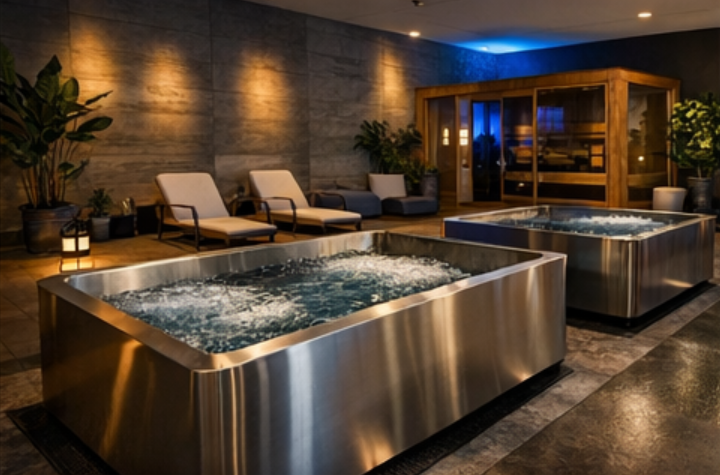

The integration of cold water immersion into mainstream health, athletic recovery, and holistic wellness protocols has catalyzed a massive transformation in the global wellness infrastructure sector. No longer confined to the training rooms of elite sports franchises or clinical rehabilitation centers, the modern cold plunge system has become a foundational asset for boutique fitness centers, high-traffic commercial gyms, specialized recovery studios, and luxury hospitality venues. As consumer awareness regarding the physiological benefits of cold exposure—ranging from reduced delayed-onset muscle soreness (DOMS) to enhanced metabolic function, reduced systemic inflammation, and psychological resilience—continues to expand, the global market for hydrotherapy equipment is experiencing unprecedented growth.
Industry data underscores this rapid expansion. The global cold plunge equipment market, valued at approximately USD 330.58 million to USD 350.3 million in the 2024–2025 period, is projected to reach between USD 488.5 million and USD 659.86 million by 2033 to 2034, registering a compound annual growth rate (CAGR) ranging from 3.76% to 8.1% depending on the specific analytical model applied.Further near-term projections forecast the market expanding by USD 110.3 million between 2025 and 2029 alone, accelerating at a 5% CAGR.This surge is driven by a convergence of trends: the rising incidence of inflammation-related discomfort among athletes, the democratization of luxurious home spa environments, and the rapid incorporation of smart technology into hydrotherapy equipment.
This explosive demand has exposed a critical operational challenge for facility managers and wellness entrepreneurs: the logistical, financial, and hygienic limitations of traditional, ice-based cooling methods. For high-throughput commercial environments, manually managing physical ice is an operationally unsustainable protocol. Consequently, the commercial ice bath chiller has emerged as the definitive technological solution. A purpose-built commercial ice bath chiller ensures exact temperature stabilization, continuous water sanitation, and uninterrupted duty cycles capable of handling heavy daily bather loads.
Selecting the appropriate equipment requires a nuanced understanding of thermodynamics, mechanical engineering, water chemistry, and commercial facility management. This comprehensive guide provides an exhaustive analysis of the technical components, buyer decision frameworks, operational best practices, and supply chain considerations necessary to procure, integrate, and maintain a commercial-grade cold plunge system.
Section 1: Why Temperature-Controlled Ice Bath Chillers Are Replacing Traditional Ice Baths
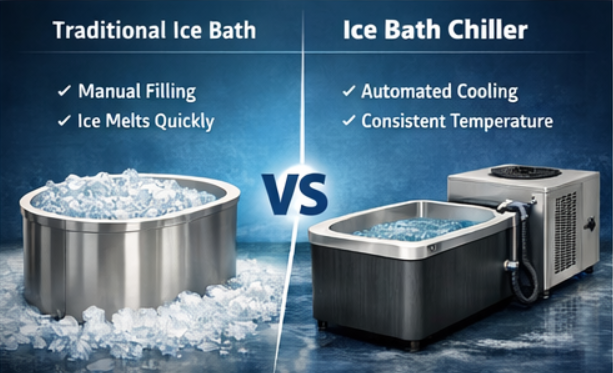
The transition from manual ice baths to automated, temperature-controlled chillers represents a necessary evolution in modern facility management. Traditional ice baths rely on a rudimentary, passive cooling mechanism that fundamentally fails in commercial settings due to three primary operational vectors: economic inefficiency, thermodynamic instability, and compromised sanitation.
Economic Inefficiency and Return on Investment (ROI)
At a foundational level, the financial model of an ice-dependent system degrades rapidly as utilization scales. For frequent users or commercial facilities, the continuous procurement, transportation, and storage of ice manifest as significant recurring operating expenditures (OPEX) and substantial labor burdens.An analysis of daily ice usage reveals that a facility cooling a moderately sized tub to therapeutic ranges (typically 39–59°F or 4–15°C) can easily spend approximately $10 per day on bagged ice alone.For an individual plunging three times a week, the annual cost of ice approaches $3,600, while a daily plunging routine drives the annual cost toward an exorbitant $6,000.This calculation entirely excludes the hidden costs of human labor required to fetch, transport, break, and monitor the ice.
By contrast, an automated commercial ice bath chiller represents a front-loaded capital expenditure (CAPEX) with remarkably low ongoing costs. Modern high-efficiency chillers consume minimal electricity and eliminate physical ice entirely.Consequently, the break-even point for purchasing a commercial chiller over relying on delivered ice typically falls between 6 and 12 months for heavy users, and potentially under 6 months for high-traffic commercial environments.
Furthermore, automated chillers transform the cold plunge from a labor-intensive cost center into a high-density, reliable revenue generator. Commercial facilities can monetize cold therapy through structured pricing models. Industry averages show per-session pricing ranging from $10 to $25 for a standard 3-to-8-minute session, dedicated recovery package add-ons yielding $30 to $60, or premium monthly membership tiers adding $40 to $100 per client.
The return on investment calculation for a commercial space is highly favorable. Operating a commercial cold plunge system capable of sustaining 30 sessions per day at a conservative $15 per session yields a potential monthly revenue of $13,500.When factoring in an estimated monthly utility, water, and routine maintenance cost of $1,200, the system delivers a robust net operational profit of $12,300 per month.In high-traffic scenarios, operators routinely report full equipment payback periods of just 6 to 9 months.
Thermodynamic Consistency and Client Safety
Ice-based setups provide a constantly deteriorating user experience. When a human body enters a cold pool, the body acts as a massive thermal radiator. A standard 80-kilogram human transfers approximately 555.2 kilojoules (kJ) of heat energy into the water during a standard plunge. If the bather transitions directly from a hot sauna—a common contrast therapy protocol—their elevated skin temperature increases the thermal load by 50%, dumping roughly 832.8 kJ of heat into the water.
In a traditional ice bath, this massive influx of heat rapidly melts the physical ice, leading to temperature stratification. The cold water sinks, while a thermal boundary layer of warm water insulates the bather's skin, causing a continuous upward drift in overall water temperature. After just 15 to 30 minutes, or a succession of three to four users, the water fundamentally loses its therapeutic efficacy.
A commercial ice bath chiller actively combats this thermal load through a continuous refrigeration cycle. The system constantly pulls warm water from the tub, passes it through a high-efficiency internal heat exchanger, and returns chilled water to the basin. This active, high-velocity circulation mechanically disrupts the insulating thermal boundary layer around the bather's skin, causing the water to feel significantly colder and maximizing the physiological extraction of heat from the tissue. Furthermore, precise digital controls prevent unpredictable temperature spikes or sudden, dangerous drops, ensuring absolute thermal consistency. This predictable delivery mechanism drastically reduces the risk of accidental hypothermia, satisfying commercial safety protocols and standardizing the therapeutic experience for diverse clientele.
Sanitation and Regulatory Compliance
A major vulnerability of traditional ice baths is the rapid accumulation of biological contaminants. Each bather introduces sweat, body oils, cosmetics, dead skin cells, and organic matter into the enclosed water volume. In a static ice bath without active filtration, these contaminants fester, creating an environment ripe for bacterial proliferation and necessitating total water replacement every few days.
In commercial settings, municipal health codes strictly regulate aquatic facilities to prevent outbreaks of waterborne pathogens such as Pseudomonas aeruginosa and heterotrophic bacteria. High-quality cold plunge systems mitigate this risk by integrating advanced, multi-stage filtration mechanisms. These closed-loop sanitation systems reduce overall water waste, minimize the reliance on harsh, skin-irritating chemical sanitizers, and ensure strict compliance with public health regulations.
Section 2: Key Factors to Consider When Choosing a Commercial Ice Bath Chiller
Procuring an ice bath machine for gyms or wellness centers requires evaluating complex technical specifications that go far beyond aesthetic design. Buyers must move past rudimentary marketing metrics and analyze the precise mechanical engineering parameters that dictate cooling speed, operational reliability, acoustic output, and total lifecycle costs.
Cooling Capacity and Compressor Quality
The most pervasive misconception in the cold plunge industry is the over-reliance on Horsepower (HP) as the primary indicator of cooling performance. While HP indicates the electrical power draw of the compressor motor, it does not reliably measure the actual thermodynamic efficiency or the heat removal capability of the system. The definitive metric for true cooling capacity is the British Thermal Unit (BTU) per hour. The BTU/hr rating dictates the exact volume of heat energy the chiller can successfully extract from the water in a 60-minute continuous window.
A highly efficient compressor with superior heat exchanger design can output significantly more BTUs than a poorly engineered compressor of higher horsepower. For instance, empirical testing data comparing different models reveals that a highly optimized 1/2 HP chiller can generate over 5,115 BTU/hr, rapidly outperforming smaller 0.3 HP units (producing only 2,400 BTU/hr) and even competing inefficiently designed 1/2 HP units (producing only 3,010 BTU/hr). For commercial applications, units such as advanced 1.0 HP chillers can deliver upwards of 9,309 BTU/hr, providing the rapid pull-down times required for high-traffic environments.
The compressor acts as the heart of the refrigeration cycle. Buyers generally face a critical choice between two primary compressor architectures: Piston (Reciprocating) compressors and Scroll compressors.
Compressor Characteristic | Scroll Compressor Architecture | Piston (Reciprocating) Compressor Architecture |
Mechanical Efficiency | Highly efficient by volume; lacks intermittent valve opening/closing losses. | Standard efficiency; experiences volumetric transmission losses during the compression stroke. |
Moving Components | Features up to 70% fewer moving parts; highly reliable due to negligible physical contact wear. | Relies on multiple moving parts (pistons, valves, crankshafts) prone to eventual mechanical wear. |
Acoustic Output | Exceptionally quiet operation, frequently operating below 70 decibels (dB). | Generates inherently louder operational noise due to mechanical impacts and gas pulsation. |
Vibration Profiles | Engineered for smooth, vibration-free, continuous air and refrigerant delivery. | Produces high mechanical vibration; requires robust dampening mounts to prevent chassis rattling. |
Capital Economics | Commands a higher initial capital expenditure, offset by long-term durability. | Features a lower initial cost profile; highly cost-effective for budget-conscious installations. |
Optimal Application | Premium indoor commercial studios, luxury spas, and environments demanding silence. | Industrial settings, outdoor recovery zones, or facilities where background noise is acceptable. |
For indoor wellness centers seeking the pinnacle of performance, inverter-driven scroll compressors are universally recommended. Inverter technology allows the compressor to dynamically modulate its operational speed based on the real-time thermal load of the water, rather than simply cycling strictly on and off at full power. This variable approach results in superior temperature stability, significantly extended hardware longevity, and substantially reduced electricity consumption.
Temperature Stability and Control Systems
The ability to maintain a remarkably tight temperature differential—often holding water steady within ±0.5°C to ±1.0°C of the target setpoint—is what definitively separates a commercial cold plunge chiller from an entry-level residential appliance. To achieve this level of precision, advanced systems rely on sophisticated digital control boards paired with environmentally optimized refrigerants. Refrigerants such as R410a, R32, and R290 (propane) are highly favored for their low environmental impact and exceptional thermodynamic phase-change properties, which allow for rapid, efficient heat absorption within the internal evaporator coils.
A highly complex yet critical feature of these thermodynamic control systems is defrost cycle management. Because chillers operate by super-cooling their internal evaporator coils to extract heat, the localized temperatures inside the copper tubing frequently drop well below freezing, routinely nearing -15°C (5°F). When humid ambient air makes contact with these sub-zero coils, the water vapor rapidly condenses and freezes directly onto the internal aluminum fins. Over a prolonged duty cycle, this creates a thick, insulating layer of solid ice that heavily restricts airflow and drastically degrades heat exchange efficiency.
To combat this, commercial chillers must deploy advanced active defrost systems. Manufacturers utilize varying methods, including hot gas bypass systems (which temporarily reverse the flow of hot refrigerant gas back through the evaporator to melt the ice from the inside out), integrated electric heating elements, or adaptive sensor-based defrost algorithms. Adaptive defrost technology is particularly valuable in commercial settings, as it utilizes sensors to only initiate the defrost cycle when frost accumulation is actively detected, rather than running on a blind, inefficient mechanical timer. This intelligent management maximizes the unit's active cooling time and minimizes parasitic energy waste.
Water Filtration and Hygiene
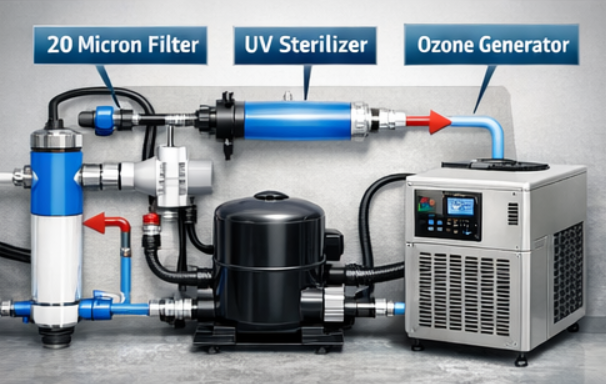
A commercial facility must prioritize aquatic hygiene to prevent outbreaks of waterborne pathogens and ensure a premium user experience. Therefore, an integrated, robust circulation and filtration system is non-negotiable. Best-in-class commercial chillers utilize a rigorous multi-stage approach to water clarity and sanitation.
Initially, water passes through a primary particulate filtration stage. This often involves a washable 40-micron pre-filter screen designed to capture macro-debris such as hair, lint, and large skin cells. Following this, the water is forced through a secondary pleated cartridge filter (typically rated at 20 microns) that effectively strips ultra-fine microscopic sediments from the flow.
For active microbial sanitation, premium chillers integrate Ozone (O3) generators or Ultraviolet (UV) sterilization systems. Ozone is an exceptionally powerful, naturally occurring oxidizer. When injected into the water flow, it destroys the cellular walls of bacteria, viruses, and organic body oils instantly upon contact, subsequently converting back into pure oxygen. This leaves no harsh chemical byproducts, eliminates chloramine odors, and drastically reduces the facility's reliance on heavy, skin-drying chemical sanitizers.
Furthermore, many operators consider implementing saltwater (saline) protocols due to the perceived dermatological benefits and the lower freezing point of saline solutions. However, operating a saltwater plunge fundamentally alters the equipment's metallurgical requirements. Saltwater is highly corrosive to standard copper piping and traditional stainless steel components. If a facility intends to utilize saltwater, the chiller must be explicitly equipped with a pure Titanium heat exchanger. Titanium offers virtually complete immunity to salt-induced galvanic corrosion. While cupronickel heat exchangers offer moderate resistance, attempting to run saltwater through standard aluminum or copper internals will lead to rapid internal erosion, chemical leaching, and catastrophic compressor failure within months.
Heat Exchanger Material | Corrosion Resistance | Thermal Conductivity | Best Application Environment |
Titanium | Absolute immunity to saltwater and chlorine. | Slightly lower than copper, but allows for thinner plating. | Saltwater plunges, premium commercial facilities, coastal regions. |
Stainless Steel | Moderate to high; susceptible to pitting in heavy saline. | High structural strength under pressure. | Standard freshwater plunges, budget-conscious setups. |
Cupronickel | High resistance to salt; traditional marine standard. | Excellent heat transfer properties. | Mid-tier saltwater applications. |
Standard Copper | Very low; highly reactive to salt and ozone (creates bromide). | Exceptionally high. | Strictly enclosed, non-corrosive freshwater residential systems. |
Continuous Operation Reliability
In a rigorous commercial setting, a chiller must endure what engineers term "long duty cycles"—meaning the system operates constantly under load without overheating, short-cycling, or tripping internal thermal overload sensors. The throughput demands in commercial environments are highly aggressive. For context, a facility expecting 50 unique visitors daily, where each client plunges 2 to 3 times as part of a contrast therapy circuit, requires the chiller to successfully process 100 to 150 individual bather thermal loads.
Every time a bather exits the tub, they physically remove approximately 2 liters of chilled water from the system. In a 150-plunge scenario, this means 300 liters of warm, ambient-temperature replacement water must be introduced into the system and subsequently chilled down to therapeutic levels. To survive this relentless, unpredictable thermal loading, the equipment must feature commercial-grade internal components, marine-grade anti-corrosive chassis materials (such as 304/316 stainless steel or galvanized, powder-coated iron), and sophisticated overcurrent and overheat protection circuitry to prevent electrical failure during peak usage hours.
Energy Efficiency and Power Requirements
The existing electrical infrastructure of a commercial facility strictly dictates which caliber of chiller can be safely installed. Sizing errors in electrical planning lead to frequently tripped breakers, frustrating facility downtime, and expensive emergency rewiring by certified electricians. Operators must conduct a thorough audit of their electrical distribution panels prior to equipment procurement.
While smaller 0.5 HP to 1.0 HP units designed for residential or light-commercial use can generally operate safely on standard 110V-120V / 15-Amp circuits, high-capacity commercial units (ranging from 2.0 HP to 5.0 HP) feature vastly different electrical demands. These heavy-duty systems frequently require 220V-240V dedicated lines, and in many global regions, mandate three-phase power supplies utilizing 32-Amp industrial receptacles. Attempting to run a heavy-duty single-phase chiller on an undersized circuit will immediately trigger the breaker upon compressor startup due to the massive inrush current (Locked Rotor Amps) required to initiate the refrigeration cycle.
To optimize operational efficiency, buyers should specify chillers equipped with Variable Speed Drives (VSD) or Brushless DC (BLDC) circulating pumps. This technology mitigates voltage spikes upon startup and improves the overall Energy Efficiency Ratio (EER). Compared to standard Alternating Current (AC) components, BLDC pumps and inverter compressors can cut long-term electricity consumption by up to 70%, rapidly paying for themselves through reduced utility overhead.
Noise Levels for Indoor Facilities
Acoustic management is a highly sensitive and frequently overlooked variable for wellness centers, yoga studios, and luxury spas, where maintaining a serene, meditative environment is paramount to the client experience. Equipment noise is measured in decibels (dB), a logarithmic scale where a mere 10 dB increase is perceived by the human ear as twice as loud. An unmitigated commercial chiller sounding like industrial HVAC equipment can completely ruin the premium positioning of a hydrotherapy room.
Operational Environment | Acceptable Noise Range (dB) | Perceived Sound Equivalent |
Premium Spa / Residential | ≤ 50 - 55 dB | Quiet library environment, soft whispered conversation. |
Commercial Gym / Studio | 55 - 65 dB | Normal conversation volume, typical bustling open office. |
Industrial / Outdoor Zones | 65 - 75+ dB | City street noise, heavy industrial manufacturing equipment. |
Air-cooled chillers extract heat by forcing massive volumes of ambient air across their condenser coils using large axial fans. This generates complex acoustic profiles: the screw or piston compressors produce mid-to-high frequency mechanical vibrations, while the up-blast condenser fans generate low-to-mid frequency aerodynamic whooshing sounds.
To effectively mitigate this acoustic footprint, operators should seek units featuring engineered sound reduction technologies. Incorporating a heavy acoustic compressor blanket or tuned sound enclosure can eliminate 1 to 2 dBA of mechanical noise. More significantly, utilizing Variable Speed Drive (VSD) or Electronically Commutated (EC) fans allows the cooling fans to dynamically spin down during off-peak load periods, which can drop the overall acoustic output by a highly noticeable 4 to 5 dBA. At the cutting edge of acoustic engineering, some premium commercial chillers now incorporate swept-back, serrated, "owl biomimetic" fan blades that break up turbulent air vortices, reducing tonal and broadband aerodynamic noise by up to 5 to 8 dBA without sacrificing volumetric airflow.
Ease of Installation and Maintenance
The physical installation environment severely impacts the ultimate cooling performance and longevity of the chiller. Chillers require copious amounts of fresh, ambient air to reject the thermal energy pulled from the water. A common and catastrophic operational failure occurs when a commercial chiller is installed in a cramped utility closet, a narrow outdoor alleyway, or pushed tight against a corner wall without adequate clearance.
Most leading manufacturers mandate an absolute minimum of one meter (approximately 3.3 feet) of unobstructed clearance on all sides of the unit. Without this critical breathing room, the hot exhaust air discharged from the fan is immediately sucked back into the intake coils—a phenomenon known as air recirculation. This causes the internal operating temperatures to skyrocket, leading to high-pressure system faults and ultimately forcing the unit to shut down to prevent total compressor burnout.
Maintenance protocols must be rigorously established and adhered to by facility staff. Standard commercial routines include daily skimming of the water surface and checking chemical pH levels, weekly rinsing of the particulate filter cartridges, and quarterly deep sanitization procedures involving full system flushes to eradicate hidden biofilm within the plumbing lines. Furthermore, operators must periodically inspect the exterior condenser coils, as heavy dust buildup on the fins severely chokes airflow, forcing the compressor to work harder and increasing electricity consumption by 10% to 20%.
Section 3: Common Mistakes Buyers Make When Purchasing Ice Bath Chillers
Purchasing an ice bath equipment supplier package without a deep, foundational understanding of thermodynamics and facility management often leads to costly misallocations of capital. A forensic analysis of field failures highlights several recurring buyer errors that compromise both operations and revenue:
Focusing Exclusively on Upfront CAPEX Over Total Cost of Ownership: Opting for the absolute cheapest available chiller on the market drastically increases the Total Cost of Ownership (TCO). Inexpensive units typically feature inefficient piston compressors, rudimentary single-speed fans, and poor internal insulation. This results in exorbitant electricity bills, continuous mechanical breakdowns, and massive lost revenue due to unexpected equipment downtime.
Miscalculating Capacity Based on Headcount Rather than Plunge Frequency: A facility may erroneously calculate its cooling needs based on 50 unique visitors per day. However, standard contrast therapy protocols involve users alternating back and forth between a sauna and a cold plunge multiple times per visit. Therefore, the chiller is actually subjected to 100 to 150 unique plunges per day. Underestimating this throughput places overwhelming strain on an undersized compressor, ensuring the water never reaches the target temperature during peak operating hours.
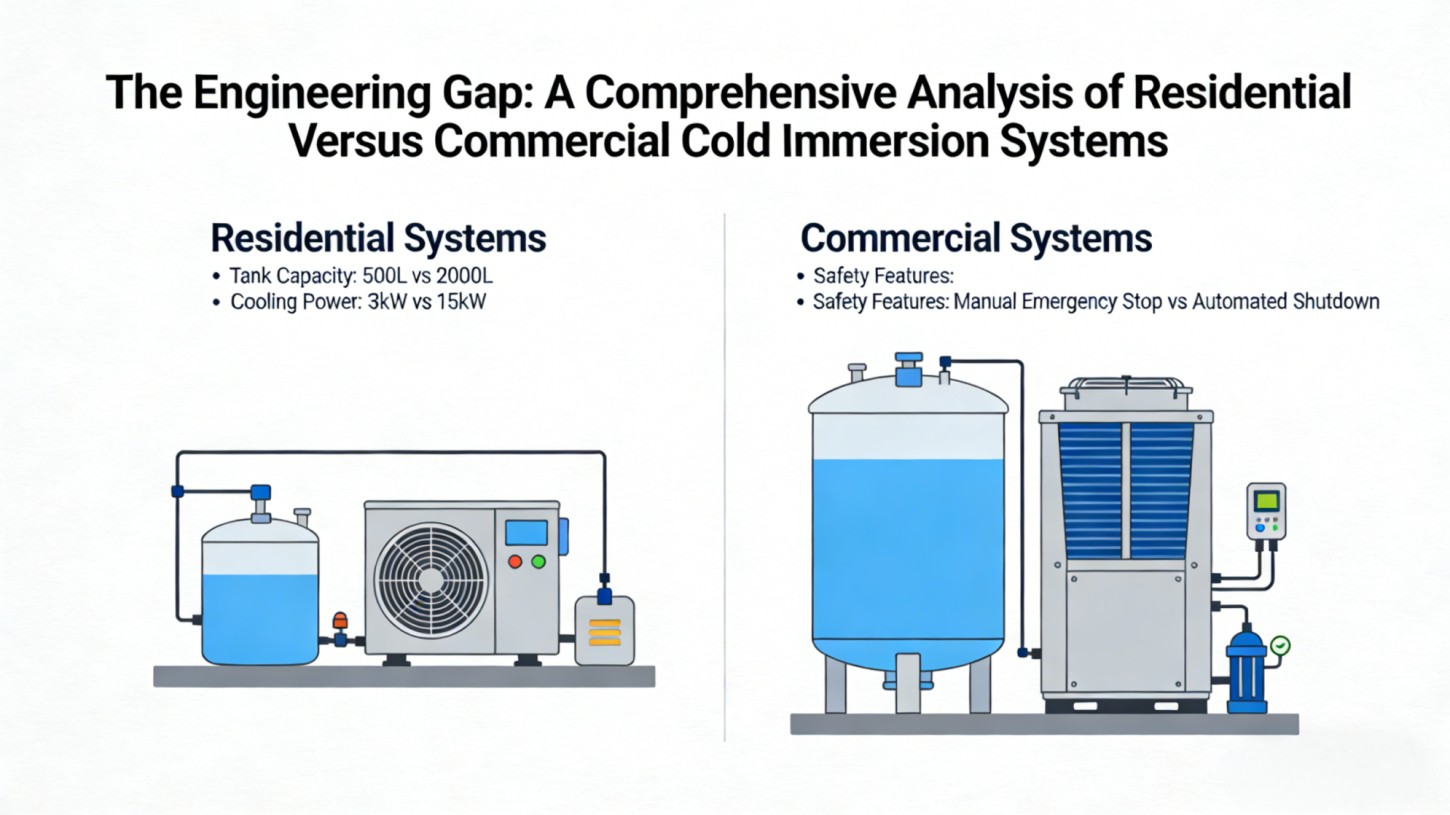
Deploying "All-in-One" Residential Units in Heavy Commercial Spaces: Fully integrated systems—where the tub, filter pump, and chiller share a single, compact cosmetic housing—are visually appealing but operationally fragile in high-traffic settings. In these systems, a heavily soiled filter can completely choke the water flow to the internal heat exchanger, causing the entire refrigeration circuit to rapidly fail. Furthermore, residential systems lack the robust duty-cycle engineering required for back-to-back bather loads, leading to severe temperature drift and client dissatisfaction.
Ignoring the Installation Environment and Airflow Dynamics: As previously noted, placing an air-cooled chiller indoors without massive, industrial-scale room ventilation guarantees failure. Indoor systems face higher ambient temperatures and rapidly heat up the room they are placed in, creating a negative feedback loop that kills efficiency.
Falling Victim to Deceptive Marketing and Thermodynamic Impossibilities: Buyers occasionally fall for exaggerated marketing language claiming a chiller can drop water to 28°F (-2.2°C) without freezing. This is a fundamental violation of thermodynamics for pure water systems; without adding chemical antifreeze (which is toxic for bathers), water freezes at 32°F (0°C). Chasing these impossible metrics leads to purchasing poorly designed, uncertifiable equipment.
Overlooking Professional Service Level Agreements (SLAs): Commercial chillers are highly complex mechanical refrigeration systems. Facilities often forget to secure an SLA with a local HVAC or commercial refrigeration technician prior to installation. A comprehensive SLA covering rapid emergency response times (e.g., a 2-hour dispatch or 48-hour on-site resolution guarantee), preventative maintenance, and seasonal inspections is vital for protecting facility revenue streams.
Section 4: Ice Bath Chiller Sizing Guide for Different Facilities
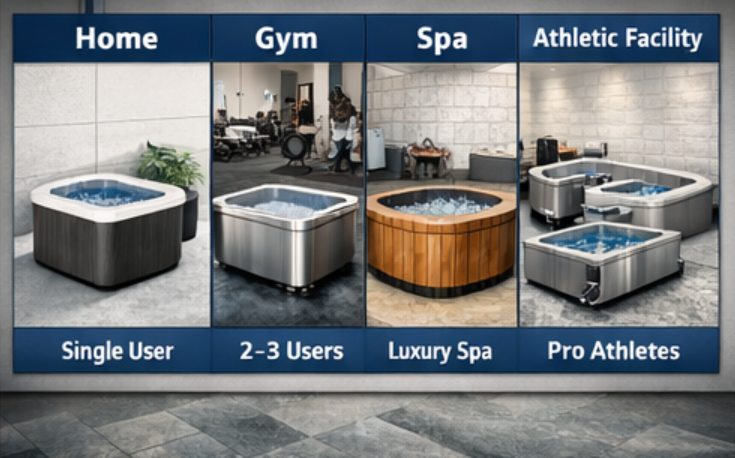
Correctly sizing a commercial ice bath chiller involves matching the unit’s BTU/hr thermal extraction rate to the total volume of water and the expected daily bather throughput. Calculating the exact required baseline capacity involves the fundamental thermodynamic formula: Cooling Load (BTU/hr) = Volume (Gallons) × 8.33 × Temperature Drop (°F) / Time Allowed for Cooling (Hours).
However, mathematical theory must be adjusted for operational realities. Facility managers must factor in extreme ambient temperatures, the thermal insulation quality of the tub, and the relentless heat loading of back-to-back bathers. The following sizing frameworks serve as highly practical guidelines for diverse commercial environments:
Home Users and Private Residences
Typical Tub Volume: 200–350 Liters (50–90 Gallons).
Expected Throughput: 1 to 3 sessions per day.
Optimal Chiller Size: 0.5 HP to 1.0 HP (producing approx. 4,000 to 9,000 BTU/hr).
Operational Context: For home use, achieving rapid, 30-minute pull-down times is less critical, as the chiller generally has hours or overnight periods to recover the temperature. The overriding priorities for residential buyers are ultra-quiet operation (<55 dB), compact aesthetic form factors, and standard 110V/120V plug-and-play electrical compatibility.
Boutique Gyms and Health Clubs
Typical Tub Volume: 350–500 Liters (90–130 Gallons).
Expected Throughput: 20 to 50 sessions per day.
Optimal Chiller Size: 1.0 HP to 1.5 HP (producing approx. 9,000 to 15,000 BTU/hr).
Operational Context: These facilities require robust, commercial-grade systems capable of rapidly recovering target therapeutic temperatures (typically 50–55°F) within 15 to 30 minutes between client bookings. Integrated multi-stage ozone filtration and highly durable stainless steel chassis construction are mandatory to handle consistent foot traffic and maintain aesthetic appeal.
High-Volume Cold Plunge Studios and Wellness Resorts
Typical Tub Volume: 500–1000+ Liters (130–260+ Gallons) or custom-built, multi-person concrete plunge pools.
Expected Throughput: 50 to 150+ sessions per day.
Optimal Chiller Size: 2.0 HP to 5.0+ HP (producing approx. 18,000 to 45,000+ BTU/hr).
Operational Context: High-throughput venues demand heavy commercial or industrial-grade split-system chillers. In split-system architectures, the noisy, heat-generating compressor and condenser fan are situated outdoors or in a dedicated mechanical room, while only the chilled water is piped into the quiet treatment room. These facilities must utilize reliable three-phase power, redundant 20-micron filtration arrays, and VSD technology to manage massive, rapidly fluctuating thermal loads generated by continuous bather entry.
Professional Sports Teams and Rehabilitation Clinics
Typical Tub Volume: 400–800 Liters (Accommodating multi-person recovery tubs).
Expected Throughput: High burst traffic (e.g., entire athletic rosters plunging within a compressed 1-hour post-training window).
Optimal Chiller Size: 2.0 HP to 3.0 HP coupled with oversized thermal buffer tanks.
Operational Context: The primary engineering challenge here is sudden, extreme heat loading. Clinical environments require absolute temperature precision (often holding rock-steady at exactly 45°F / 7°C) to execute standardized, peer-reviewed medical rehabilitation protocols. Compliance with strict municipal sanitation standards is closely monitored, requiring advanced UV light and ozone integration to protect athletes with open abrasions.
Facility Profile | Tub Volume | Recommended Chiller Power | Daily Throughput | Key Priority |
Home / Residential | 200 - 350 L | 0.5 HP - 1.0 HP | 1 - 3 Plunges | Silence, 110V Power. |
Boutique Gym | 350 - 500 L | 1.0 HP - 1.5 HP | 20 - 50 Plunges | Rapid Recovery, Filtration. |
Cold Plunge Studio | 500 - 1000+ L | 2.0 HP - 5.0 HP | 50 - 150+ Plunges | Heavy Duty Cycle, VSD tech. |
Sports Rehab Clinic | 400 - 800 L | 2.0 HP - 3.0 HP | Burst Traffic (Rosters) | Exact Temp Stability, Sanitation. |
Section 5: OEM and Private Label Opportunities for Ice Bath Brands
The explosive global consumer demand for cold plunge systems has birthed a highly lucrative sub-industry: white-label manufacturing and OEM (Original Equipment Manufacturer) branding. Savvy entrepreneurs, existing wellness brands, and large-scale equipment distributors are increasingly bypassing domestic middlemen to partner directly with established Asian and North American refrigeration manufacturers (such as Exinda, Syochi, and Lando). These partnerships allow brands to design, deeply customize, and import their own proprietary OEM ice bath machine lines.
Navigating the OEM manufacturing pipeline requires strict oversight of product specifications, software integration, and international regulatory compliance. Reputable tier-one manufacturers offer comprehensive B2B customization frameworks that span across four critical pillars:
Hardware Branding and Product Design
OEM suppliers provide extensive structural and aesthetic customization to ensure brand differentiation. Brands can dictate the physical dimensions, exterior cabinet materials (ranging from cost-effective galvanized steel to highly durable, marine-grade 316 stainless steel or custom-molded composites), and specific brand colorways using exact RAL color matching. Furthermore, premium manufacturers facilitate custom tooling for specialized tub connections, allowing the chiller unit to integrate seamlessly with a brand's specific inflatable barrel, acrylic tub, or stainless-steel basin without requiring clumsy aftermarket adapters or DIY plumbing.
Control System and Firmware Customization
Modern consumers implicitly expect smart, connected wellness devices. Leading OEM partners allow for total digital control panel branding and the integration of highly customized firmware. A prevalent and powerful industry standard is the utilization of the Tuya Smart IoT platform. Through Tuya SDK integration, manufacturers can provide a fully white-labeled mobile application (available natively on iOS and Android) that matches the brand’s exact visual identity.
This deep digital integration empowers the end-user to execute remote temperature adjustments from anywhere in the world, initiate manual ozone sanitation cycles, monitor real-time diagnostic alerts, and program complex weekly cooling schedules. This elevates the product from a rudimentary cooling appliance to a premium, integrated smart-home device, allowing brands to charge a significant premium.
Engineering and Refrigerant Selection
B2B clients can collaborate closely with factory engineering teams to spec internal mechanical components based on their target market's specific geographic climate. For instance, brands selling into the Middle East or the Southern United States can explicitly specify heavy-duty 2.0 HP compressors engineered to maintain 3°C (37°F) water even when subjected to blistering 52°C (125°F) ambient outdoor temperatures. Furthermore, environmentally conscious brands can specify their preferred eco-friendly refrigerants—such as R32 or R290 (Propane)—to align perfectly with the stringent environmental regulations and carbon-reduction mandates of markets like the European Union and North America.
Certifications, Audits, and Export Compliance
The regulatory barrier to entry for importing heavy electrical equipment that interfaces directly with water is rightfully high. A tier-one OEM ice bath equipment supplier must maintain rigorous ISO9001 factory compliance and provide internationally recognized electrical safety certifications. Brands must rigorously verify that their supplier provides CE and RoHS compliance for Europe, and critically, UL, ETL, or CSA safety certifications if targeting the highly litigious North American market. Lack of an ETL or UL mark can prevent commercial facilities from legally installing the equipment due to insurance liabilities.Furthermore, experienced manufacturers seamlessly assist with international logistics, providing accurate Harmonized System (HS) codes, customs documentation, and even white-label drop-shipping logistics directly to the end consumer, eliminating the need for the brand to hold massive domestic inventory.
Conclusion
The structural transition toward commercial-scale cold water immersion is no longer a fleeting fitness trend; it is a permanent, standardized requirement for modern recovery infrastructure. Selecting the correct commercial ice bath chiller requires a rigorous departure from the aesthetic-first consumer mentality, demanding instead a strict, empirical evaluation of thermodynamic performance, mechanical durability, and acoustic footprint.
Procuring a properly sized, high-efficiency cold plunge system—equipped with robust inverter-driven scroll compressors, intelligent adaptive defrost mechanics, and impervious titanium heat exchangers—fundamentally transforms the financial and operational reality of a wellness facility. It entirely eliminates the unsustainable labor and recurring material costs associated with manual ice logistics, replacing them with a highly predictable, high-margin revenue stream that pays for itself in a matter of months. More importantly, it guarantees an elite, medically consistent user experience defined by pristine sanitation and unwavering temperature stability, regardless of whether it is the first or the fiftieth therapeutic session of the day.
For facility owners, prioritizing ease of maintenance, securing stringent Service Level Agreements for preventative care, and honoring the spatial requirements for condenser thermal exhaustion will ensure the longevity of the capital investment. For entrepreneurs and equipment distributors, the highly robust ecosystem of international OEM manufacturing provides a scalable, turnkey pathway to enter the market with customized, smart-enabled products that meet rigorous global safety standards. Ultimately, investing in precision-engineered cooling technology is the definitive strategy to elevate a wellness brand, capture recurring client revenue, and deliver the profound physiological benefits of hydrotherapy safely, efficiently, and consistently for years to come.
At Quanguan, we work directly with gyms,recovery studios, and professional facilitiesto ensure commercial ice bath systems areinstalled correctly from day one. With hands-on manufacturing experience and adeep understanding of real-worldinstallation challenges, our team helpsclients avoid common mistakes, reducelong-term operating costs, and achievestable, reliable performance.
lf you are planning a commercial ice bath installation or evaluating systemrequirements for your facility, contact Quanguan to discuss your project and getpractical guidance tailored to your spaceand usage needs.