
Introduction
The global wellness industry is currently undergoing a profound structural shift, characterized by the institutionalization of recovery modalities that were once exclusively relegated to elite athletic training facilities. Among the most prominent of these modalities is cold water immersion. While the practice traces its roots back to the frigidariums of ancient Roman bathhouses, it has recently experienced an explosive commercial renaissance. Market analyses indicate that the global cold plunge tub market was valued at nearly $338 million in 2024 and is projected to reach approximately $483 million by 2033, expanding at a compound annual growth rate of 6.5 percent.This demand is surging across varied demographics, with the United Kingdom witnessing a 925 percent increase in consumer interest and the United States seeing a 500 percent spike.
This meteoric rise in consumer demand presents a highly lucrative opportunity for commercial fitness operators, wellness resorts, and sports recovery facilities. The physiological benefits of cold water immersion—ranging from the constriction of blood vessels to flush out lactic acid, to the stimulation of the parasympathetic nervous system and a 250 percent increase in dopamine concentrations—have been heavily validated by professional sports organizations.Today, over 70 percent of professional sports teams in North America have integrated cold-water immersion into their core recovery protocols.
However, as commercial entities scramble to integrate these systems into their amenity portfolios to capture new revenue, many fall into the trap of deploying traditional, ice-based baths. While purchasing bags of ice for a steel tub appears to be a low-barrier entry point, the reality of operating a commercial-scale ice bath program is fraught with crippling operational inefficiencies, severe hygiene risks, and exorbitant long-term financial liabilities. The transition from manual ice management to deploying a dedicated commercial ice bath chiller is no longer a luxury upgrade; it is an absolute operational imperative for any facility seeking to scale its recovery offerings securely and profitably.
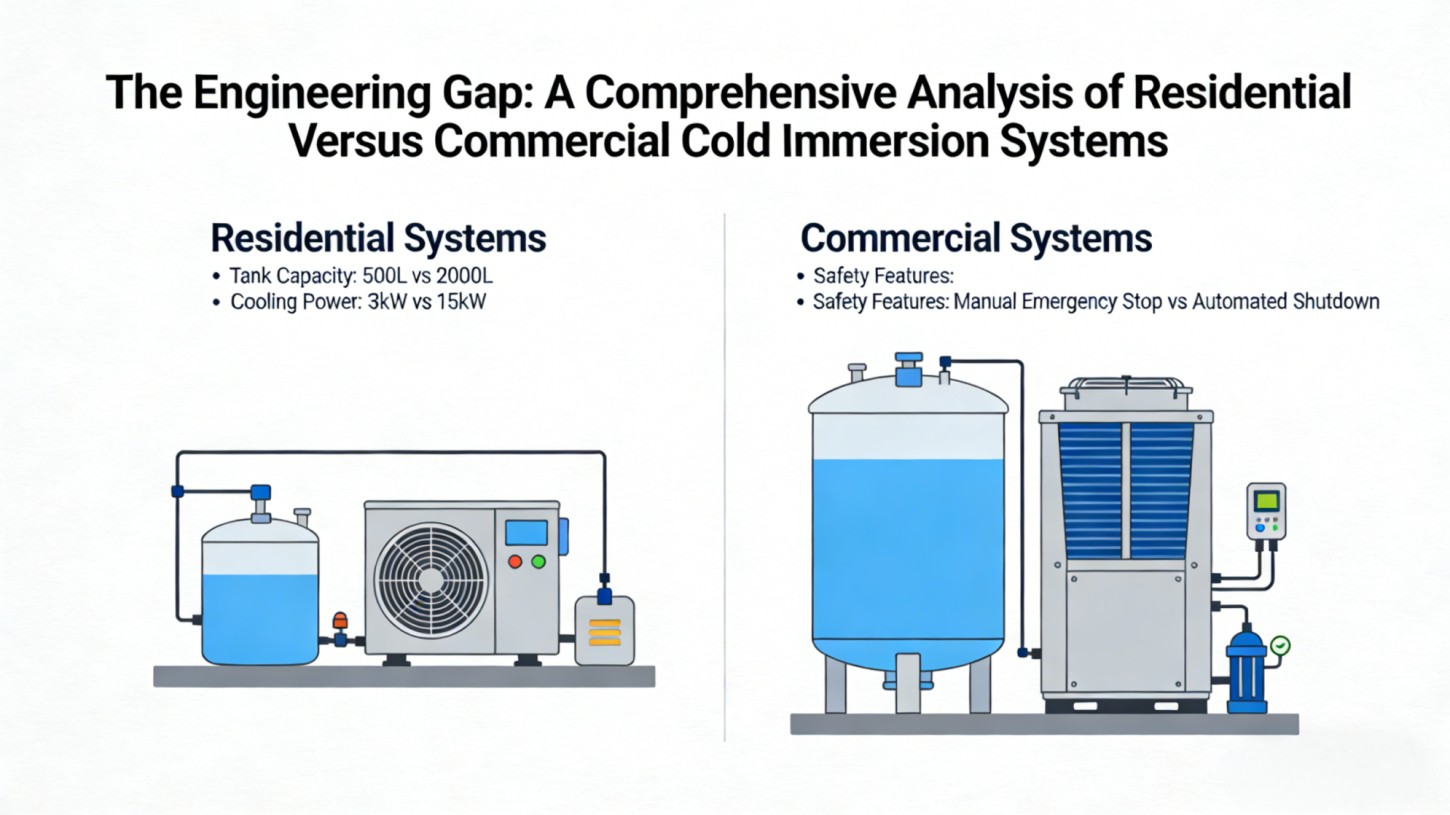
This comprehensive industry report analyzes the operational challenges and hidden costs associated with traditional ice baths, explores the engineering and sanitary advantages of a modern cold plunge system, and provides an evidence-based roadmap for facility operators evaluating professional ice bath equipment.
Section 1: Traditional Ice Baths: How They Work
To understand the operational friction of traditional ice baths, one must analyze the thermodynamics and labor mechanics required to execute a single cold therapy session using bagged ice. The foundational mechanism of an ice bath relies on the latent heat of fusion. When bagged ice is introduced to tap water, thermal energy from the warmer water transfers to the ice, breaking the hydrogen bonds of the solid water molecules and causing a phase change from solid to liquid. This endothermic reaction draws heat out of the surrounding water, lowering the overall temperature of the tub.
In a residential scenario, this process is merely inconvenient. In a commercial environment, it is highly volatile and labor-intensive. To cool a standard 40-gallon bathtub from a typical ambient tap water temperature of 73°F down to an effective therapeutic threshold of 47°F, an operator must manually introduce approximately 5.7 ten-pound bags of ice.Commercial vessels, which often hold between 200 and 400 liters (52 to 105 gallons) of water, require exponentially more ice to achieve and maintain therapeutic temperatures.
The mechanical process of preparing a traditional ice bath is inherently archaic. Staff members must manually transport heavy bags of ice from a commercial freezer to the plunge area, break the ice blocks apart, and distribute them into the water. Because water stratifies thermally—with warmer water rising to the top and colder water sinking to the bottom—the staff member or the user must aggressively stir the water to ensure an even temperature distribution.
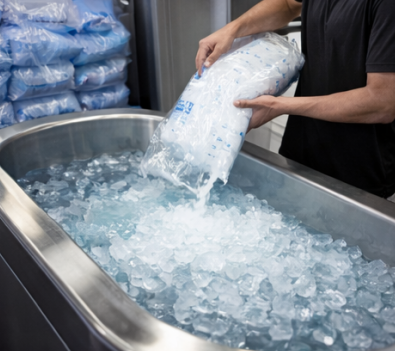
The time expenditure required for this manual preparation is substantial. Analytical breakdowns of the traditional ice bath preparation process indicate that a single session requires approximately 46 minutes of active and passive time investment.This workflow includes the time required to procure the ice, physically open and dump the bags (averaging 1.4 minutes), wait for the water to cool while continuously stirring (averaging 25 minutes), and execute post-plunge cleanup to manage melted ice and wet facility floors (averaging 5 minutes).In a commercial setting tasked with processing dozens of users daily, this manual thermal regulation completely collapses, leading to unpredictable water temperatures, severe inconvenience for staff, and an inability to process back-to-back client sessions.
Section 2: The Hidden Costs of Ice-Based Ice Baths
The financial architecture of running a traditional ice bath is characterized by a deceptively low initial capital expenditure, which aggressively masks exorbitant recurring operating expenses. Facility owners who opt for non-refrigerated tubs quickly discover that the daily procurement of ice rapidly erodes any potential profit margins generated by the recovery service.
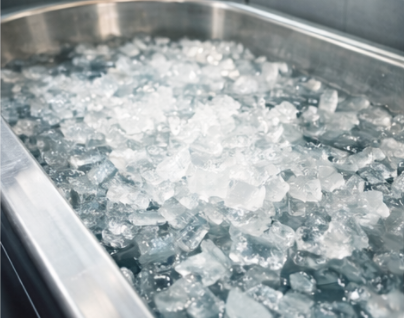
The fundamental flaw in the traditional ice bath model is the continuous consumption of a depleting resource. At an average retail or wholesale cost of $3.00 per ten-pound bag, cooling a modest volume of water costs approximately $17.01 per use.When modeled over a fiscal year, the financial drain becomes glaringly apparent. For a single daily user, the annual cost of bagged ice ranges dramatically from $3,650 to over $14,600, depending on ambient temperatures, water volume, and local ice procurement costs.
When evaluating these metrics within a commercial facility that facilitates multiple plunges per day, the costs multiply exponentially. A wellness center processing just 10 plunges a day using traditional ice methods could easily expend hundreds of dollars daily on frozen water alone. The recurring expense of ice offers absolutely zero return on investment; it is a sunk cost that literally melts away within hours, offering no infrastructural value to the business.
Usage Frequency (Light to Heavy Commercial) | Estimated Monthly Ice Cost | Estimated Annual Ice Cost | Cost Implication |
3 Sessions per Week | $204.00 | $2,448.00 | Unsustainable for high-margin business |
5 Sessions per Week | $340.00 | $4,080.00 | Exceeds the cost of a premium chiller |
Daily Use (Single Bather) | $510.00 | $6,120.00+ | Severe margin erosion |
Commercial Use (10+ Sessions/Day) | $1,500.00+ | $18,000.00+ | Total operational failure point |
Table 1: Financial modeling of direct ice procurement costs based on usage frequency. Data indicates that commercial operations face debilitating material costs when utilizing traditional cooling methods.
Beyond the physical commodity of ice, operators must account for the secondary financial hemorrhaging caused by labor inefficiencies and water consumption. Every hour a staff member spends procuring ice, preparing the bath, monitoring the temperature, and mopping up condensation is an hour diverted from revenue-generating activities, customer acquisition, or facility management.
Furthermore, traditional ice baths present a massive water management challenge. Because there is no mechanical filtration or sanitation system integrated into a standard tub, the water becomes biologically contaminated almost immediately after the first bather exits. To maintain even a baseline level of sanitary compliance, operators must drain and refill the tub continually. Each bather removes approximately two liters of water upon exiting the plunge, requiring constant manual top-offs to maintain volume.In the absence of a recirculating system, best practices and health guidelines dictate that stand-alone cold plunge tanks must be completely drained, cleaned, and disinfected between every single user.The municipal cost of thousands of gallons of water per month, coupled with the sewage costs associated with draining, adds a significant, often uncalculated line item to the facility's utility expenditures.
Perhaps the most insidious hidden cost is the degradation of the member experience and subsequent client attrition. Consumers paying premium rates for recovery services expect clinical consistency. With an ice-based system, the first user of the day may experience water at 38°F, while the fourth user, plunging into partially melted ice water, may only experience 55°F water. This temperature fluctuation causes frustration, eliminates the standardization of the therapeutic dose, and directly leads to poor user retention. Many clients abandon cold plunge memberships after a few sessions if the facility fails to provide a perpetually ready, temperature-controlled environment.
Section 3: Operational Challenges in Commercial Facilities
The transition from a personal ice bath to a commercial operation introduces a complex matrix of microbiological, physiological, occupational, and regulatory hazards. Facility managers must understand that cold water is not inherently sterile, and a basin of shared, static water is a highly efficient vector for disease transmission and injury.

A pervasive myth within the fitness community is that freezing temperatures kill bacteria and prevent infection. In reality, cold water merely slows the replication rate of certain microorganisms; it does not eliminate the risk of infection, and in many cases, it creates unique challenges for chemical sanitizers. The shared use of commercial cold plunge tanks creates a severe risk for the transmission of waterborne pathogens. Public health analyses have documented outbreaks among athletes using shared ice baths involving Staphylococcus aureus (including methicillin-resistant MRSA), Streptococcus pyogenes, herpes simplex virus type 1 (HSV-1), and various fungal infections. A particularly alarming metric is the risk of fecal contamination; surveys indicate that 12 percent of distance runners experience fecal incontinence, introducing organic contaminants into shared water that can spread protozoan pathogens like Cryptosporidium and Giardia.
Premise plumbing pathogens such as Pseudomonas aeruginosa and Legionella pneumophila pose severe threats in aquatic environments. Pseudomonas is notorious for forming robust biofilms—slimy layers of bacteria that adhere to the walls of the tub and the internal plumbing, protecting the underlying bacteria from chemical sanitizers. Legionella, which causes the severe respiratory illness Legionnaires' disease, can be transmitted through the inhalation of aerosolized water. While Legionella thrives in warmer water, it can persist in complex aquatic systems, and its presence is heavily influenced by the lack of residual disinfectants and the age of the plumbing systems. The application of disinfectants in cold water presents a distinct operational hurdle. The efficacy of traditional halogens, such as chlorine and bromine, is significantly reduced at lower temperatures. Because cold water depresses the chemical reaction rates of these sanitizers, facilities must maintain heightened attention to water chemistry and often require higher residual concentrations to achieve the same microbial kill rates as they would in a heated spa.
Operating a manual ice bath program also places an undue physical burden on facility staff. The repeated lifting, hauling, and dumping of 10-to-20-pound bags of ice introduces significant ergonomic risks and increases the likelihood of musculoskeletal injuries among employees. Additionally, the constant state of wet floors surrounding traditional tubs creates acute slip-and-fall hazards for both staff and patrons. Furthermore, industrial ice-making machines, if utilized on-site to circumvent retail ice purchases, introduce their own occupational hazards. The Occupational Safety and Health Administration (OSHA) heavily monitors these units for mechanical entanglement risks during maintenance and cold stress hazards.
Finally, the regulatory landscape governing commercial ice baths is currently fragmented but tightening rapidly. In many jurisdictions, stand-alone cold plunge tubs lacking recirculating filtration or automatic disinfection systems are not explicitly covered by standard municipal swimming pool regulations, creating a dangerous regulatory void. However, health departments are increasingly applying recreational water contact facility guidelines to cold plunges, requiring strict permitting. Operators face significant legal and financial liability if a pathogenic outbreak is traced back to their facility, necessitating strict adherence to emerging standards that mandate specific water turnover rates and dual-disinfection requirements.
Section 4: Why Temperature-Controlled Ice Bath Chillers Are Replacing Ice
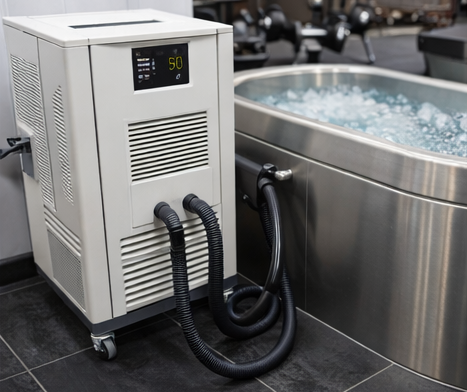
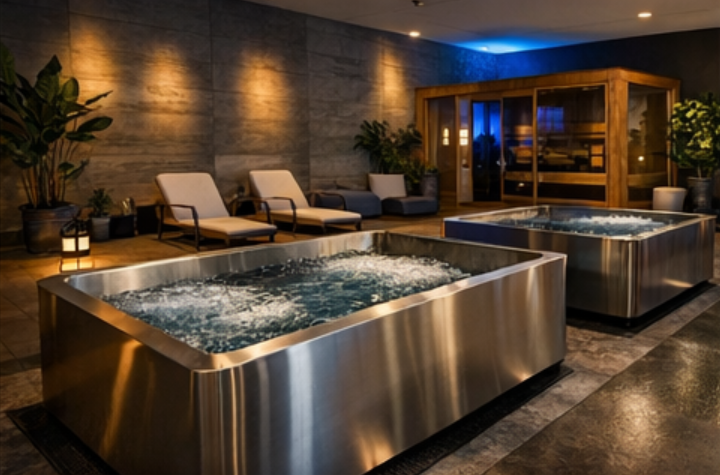
To eliminate the logistical nightmares and hygiene risks associated with manual ice loading, professional facilities are universally adopting the commercial ice bath chiller. A cold plunge chiller is a sophisticated electromechanical system that continuously cycles water through a refrigeration unit and a multi-stage filtration loop, maintaining exact therapeutic temperatures and pristine water quality 24 hours a day.
At the core of professional ice bath equipment is the refrigeration compressor. These units function similarly to industrial air conditioning systems, utilizing refrigerants to absorb heat from the water and exhaust it into the surrounding air. High-performance models feature reverse cycle motors, allowing the equipment to operate as both a chiller and a heater, dropping water temperatures to a crisp 37°F (3°C) or raising them to 105°F (40°C) for contrast therapy. This automatic cooling completely eliminates the need for ice. Facility managers simply set the desired temperature via a digital interface, and the chiller automatically regulates the thermal load. When a user enters the tub, introducing body heat to the water, the chiller's sensors immediately detect the temperature variance and engage the compressor to pull the heat out, ensuring a consistent user experience.
A commercial ice bath chiller does much more than cool water; it serves as a self-contained public health management system. Modern systems utilize a highly engineered loop: water is pulled from the tub, passed through a pre-filter, pushed through the chiller's heat exchanger, exposed to secondary sanitation, and returned to the tub. Putting the filter before the heat exchanger is critical, as it shields the delicate refrigeration components from hair, grit, and organic load, thereby extending the lifespan of the machine. To combat the diminished efficacy of chlorine in cold temperatures, commercial cold plunge systems employ advanced oxidation processes (AOP), typically integrating Venturi-injected ozone (O₃) or Ultraviolet (UV-C) light. Ozone is up to 100 times more effective than chlorine at destroying organic matter and effectively eliminates the cloudy water and foul odors caused by sweat and body oils without leaving chemical residue. UV-C sanitation alters the DNA of microorganisms as they pass the bulb, preventing them from replicating. The most advanced commercial systems feature cloud-based monitoring and automated chemical dosing, which continually measures pH and chlorine levels and injects exact micro-doses to maintain compliance without manual staff intervention.
This transition to automated, sanitary systems profoundly improves operational efficiency, drastically reducing labor while unlocking new revenue streams across various business models:
Gyms and Wellness Resorts: Large-scale fitness operators are leveraging cold plunge systems as premium acquisition and retention tools. Life Time, a premier athletic country club operator, is currently deploying dedicated cold plunge systems to more than 70 of its clubs nationwide, complementing its existing Rejuvenation Suites to aid in member muscle recovery and inflammation reduction. Because sessions are inherently short, a single commercial tub can process a massive volume of clients per day. When positioned as a premium service rather than a complimentary amenity, a commercial cold plunge system can generate between $60,000 and $150,000 in annual revenue, providing an astronomical ROI on the equipment investment. Furthermore, integrations with payment platforms like Truemed allow businesses to accept HSA/FSA funds for cold therapy, which has been shown to increase Average Order Value (AOV) by 109 percent, expanding accessibility for health-conscious consumers.
Sports Teams: The highest echelons of professional sports have entirely abandoned ice in favor of highly engineered recovery rooms. Facilities like the Los Angeles Rams' $250 million headquarters feature dedicated "Recharge Rooms" with advanced aquatic therapy setups, including the $159,500 Ammortal Chamber. Athletes rely on precise 39°F to 42°F water temperatures for three-minute sessions to trigger anti-inflammatory responses. The consistency provided by commercial chillers allows sports medicine directors to standardize recovery protocols across an entire roster of athletes, minimizing downtime and optimizing on-field performance.
Physical Therapy Clinics: In the clinical sector, cold water immersion is a rigorously documented modality for reducing edema, managing pain, and facilitating neuromuscular recovery following acute injuries. Because commercial chillers offer verifiable, dose-controlled temperature settings, physical therapists can integrate them into evidence-based treatment plans and directly monetize the service through insurance reimbursement. Clinics actively bill for cold water immersion using specific Current Procedural Terminology (CPT) codes. CPT Code 97113 (Aquatic Therapy) is utilized for aquatic therapy with therapeutic exercises, reimbursing an average of $93 to $111 per session depending on the payer. Additionally, CPT Code 97034 (Contrast Baths) is billed when providers alternate the patient between hot and cold water to produce reflex hyperemia. By utilizing a sanitary, temperature-controlled ice bath machine for a gym or clinic, providers eliminate the liability of manual ice baths and secure consistent billing compliance.
Section 5: Cost Comparison: Ice vs Ice Bath Chiller
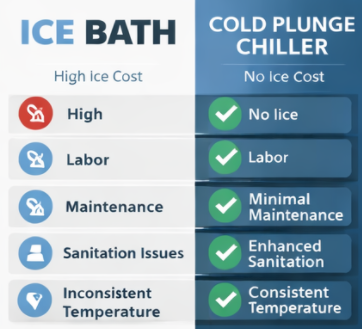
When subjected to rigorous financial scrutiny, the transition from purchasing ice to operating a commercial ice bath chiller presents one of the most compelling Return on Investment (ROI) profiles in the wellness equipment sector. While the upfront capital expenditure for a chiller is higher, the operational expenses plummet to negligible levels.
A primary concern for facility operators is the energy consumption comparison of running a refrigeration unit continuously. However, modern cold plunge chillers are astonishingly energy efficient. Efficiency in refrigeration is governed by the duty cycle—the amount of time the compressor actively runs versus the time it rests. A powerful 1 HP chiller will rapidly pull the water down to the target temperature and then cycle off, relying on the tub's thermal insulation to hold the cold. It then only requires low-power maintenance hums to offset ambient heat and bather loads. Empirical data reveals that a standard 1 HP commercial ice bath chiller cooling 200 liters of water and maintaining it at 3°C for 24 hours consumes approximately 4.8 to 7.46 kilowatt-hours (kWh) per day. At a standard US electricity rate of $0.12 to $0.19 per kWh, the daily operational cost is roughly $0.50 to $0.90. For larger, high-traffic commercial installations utilizing a 2 HP chiller, the consumption roughly doubles to approximately 14.92 kWh per day, resulting in a daily electricity cost of roughly $1.79, or $53.71 per month.
Cost Metric | Traditional Ice Bath (Commercial Volume) | Commercial Ice Bath Chiller (1 HP - 2 HP) |
Upfront Equipment Cost | $500 - $1,500 (Basic Tub) | $2,350 - $13,000+ |
Daily Cooling Cost | $50.00 - $150.00 (Bagged Ice) | $0.50 - $1.80 (Electricity) |
Monthly Cooling Cost | $1,500 - $4,500 | $15.00 - $55.00 |
Annual Cooling Cost | $18,000 - $54,000 | $180.00 - $660.00 |
Maintenance & Sanitation | High (Constant water draining, labor) | $200.00 - $500.00 (Annual filters, chemicals) |
Table 2: Comparative financial analysis of traditional ice procurement versus thermodynamic chilling systems over a 12-month period in a commercial environment.
For most regular users, the break-even point on a dedicated cold plunge system occurs between 10 to 16 months. For high-volume commercial facilities, the break-even point is achieved in a matter of weeks. The elimination of daily ice usage, combined with drastically reduced water consumption and labor costs, transforms the recovery space from an operational cost center into a high-margin profit driver.
Section 6: How to Choose the Right Cold Plunge Chiller
Selecting the correct commercial ice bath chiller requires a technical assessment of the facility's specific operational demands. Purchasing an undersized unit to save capital will result in continuous compressor cycling, premature mechanical failure, and warm water during peak hours. Conversely, heavily oversized units will short-cycle, wasting energy and wearing out electrical contactors.
The core metric in chiller selection is cooling capacity, traditionally measured in Horsepower (HP) or British Thermal Units (BTU), where one Ton of refrigeration equates to 12,000 BTU/hour. To accurately size a chiller, facility engineers must calculate the heat load of the water volume and the anticipated bather load using the specific heat equation: Q=GPM×C×ΔT×499.8 Where Q represents the Heat Load in BTU/hr, GPM is the flow rate in gallons per minute, C is the specific heat of the fluid, and ΔT is the change in fluid temperature.
In practical application for commercial wellness spaces, sizing requires evaluating several critical variables. First is the relationship between pool size and recovery speed. A large 5,000-liter pool takes significant energy to cool initially, but its massive thermal inertia easily absorbs the heat of a human body without fluctuating in temperature. A smaller 1,000-liter pool cools rapidly but heats up instantly when a user enters. Therefore, high-turnover small pools require disproportionately powerful chillers to pull out the bather's heat between back-to-back sessions. Second, operators must calculate the bather load and the sauna multiplier. Facilities must track the number of plunges, not just the headcount; 50 members plunging twice equals 100 thermal load events. Critically, if the facility offers contrast therapy (hot saunas paired with cold plunges), the heat load imposed on the chiller increases by 50 percent. For an average 80kg individual, the physical heat load jumps from 555.2 kJ to 832.8 kJ as their skin temperature climbs from standard room temperature to 42°C in a sauna. For light commercial use (200-300 liters), a 0.8 HP to 1 HP unit is generally sufficient, while heavy commercial environments managing 400+ liters require a 1.5 HP to 2 HP system to ensure rapid recovery times.
Beyond thermodynamic capacity, facility managers must audit their infrastructural constraints. True commercial chillers draw significant amperage. Installing a 3-phase chiller on a single-phase electrical supply can trigger catastrophic rewiring costs, and many 2 HP commercial units require dedicated 32-amp circuits to prevent breakers from tripping during compressor startup. Ventilation is equally critical; chillers extract heat from the water and exhaust it into the ambient air. Placing a high-power chiller in a poorly ventilated indoor room will result in severe thermal throttling and could necessitate the installation of industrial HVAC ventilation costing upwards of $30,000. Sound output must also be evaluated, with facilities seeking units operating below 65 dB to prevent disruption to the spa atmosphere. Finally, for maximum liability protection, commercial buyers should source systems that meet NSF/ANSI 50 standards, ensuring that the pumps, filtration mechanics, and materials meet strict public health mandates for recreational water facilities.
Once installed, maximizing the lifespan of the equipment requires adherence to a strict maintenance protocol.
Maintenance Frequency | Required Tasks for Commercial Chillers |
Daily | Check water clarity; verify digital temperature settings; listen for irregular compressor noises; clear immediate debris. |
Weekly | Skim water surface; wipe tub edges; inspect condenser water regulating valves; test water chemistry and adjust automated dosing systems. |
Monthly | Replace or rinse primary particulate filters (every 2-4 weeks for commercial); execute partial or full water changes (every 4-8 weeks depending on ozone/UV presence); inspect GFCI power cords; clean intake screens. |
Table 3: Standardized preventative maintenance schedule for commercial cold plunge chillers to ensure sanitary compliance and mechanical longevity.
Conclusion
The era of manual ice management in commercial fitness and wellness spaces has definitively ended. While traditional ice baths served as the necessary catalyst to introduce the public to the profound physiological benefits of cold water immersion, the methodology is fundamentally incompatible with the rigorous demands of modern commercial operations. The reliance on bagged ice creates a cascading chain of hidden costs: exorbitant direct material expenses, thousands of dollars in wasted labor hours, uncontrolled water consumption, and the constant threat of public health liabilities stemming from unregulated microbial growth.
The widespread adoption of the commercial ice bath chiller represents the structural maturation of the recovery industry. By leveraging advanced refrigeration thermodynamics, reverse-cycle heating capabilities, and medical-grade ozone and UV sanitation loops, these systems transform a chaotic, labor-intensive chore into an automated, highly profitable business asset. For gym owners, wellness center operators, and clinical directors, the mathematical calculus is undeniable. The operational efficiencies gained by installing professional ice bath equipment immediately offset the initial capital expenditure, driving the break-even point down to a matter of months while enabling sophisticated monetization strategies through premium memberships and insurance billing. More importantly, temperature-controlled chillers deliver the clinical consistency and pristine hygiene that premium consumers demand. As the wellness market continues its aggressive global expansion, facilities that abandon the ice bag in favor of engineered thermal control will not only protect their bottom line but will position themselves at the forefront of the commercial recovery revolution.
At Quanguan, we work directly with gyms,recovery studios, and professional facilitiesto ensure commercial ice bath systems areinstalled correctly from day one. With hands-on manufacturing experience and adeep understanding of real-worldinstallation challenges, our team helpsclients avoid common mistakes, reducelong-term operating costs, and achievestable, reliable performance.
lf you are planning a commercial ice bath installation or evaluating systemrequirements for your facility, contact Quanguan to discuss your project and getpractical guidance tailored to your spaceand usage needs.