
1. Introduction: The Growth of Private Label Ice Bath Brands
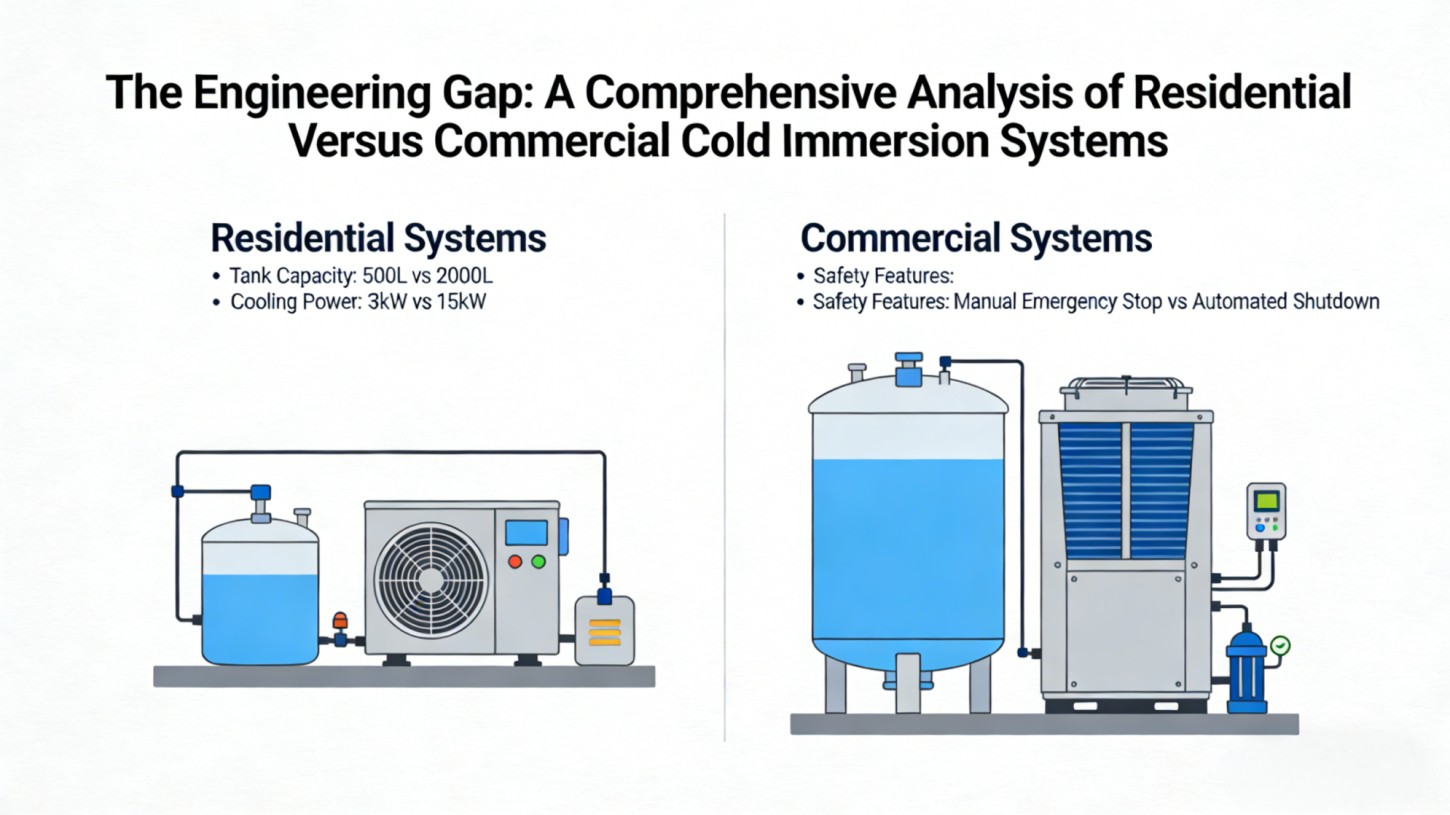
The global wellness industry is currently witnessing a paradigm shift in the accessibility and commercialization of recovery modalities. Cold Water Immersion (CWI), once the exclusive domain of elite athletic training facilities and clinical rehabilitation centers, has rapidly democratized, entering the residential and boutique fitness markets with unprecedented velocity. This transition has been catalyzed by a convergence of factors: the rising popularity of "biohacking," the widespread dissemination of contrast therapy protocols through digital media, and a consumer base increasingly willing to invest in sophisticated preventative health hardware. Consequently, the demand for purpose-built cold plunge apparatuses—specifically, integrated systems comprising insulated vessels and active refrigeration units—has surged, creating a vibrant but volatile market for new entrants.
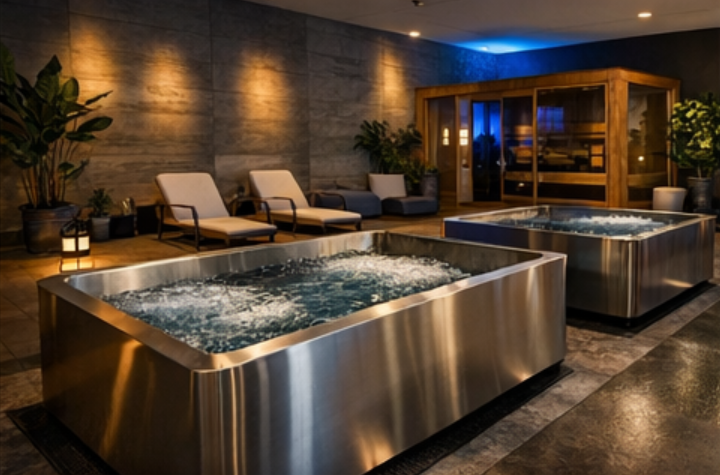
For fitness brands, wellness entrepreneurs, and equipment distributors, this burgeoning demand presents a compelling commercial opportunity. The "ice bath" is no longer a rudimentary trough filled with consumable ice; it has evolved into a high-technology appliance requiring precise thermal regulation, advanced filtration, and aesthetic integration into luxury home and gym environments. To meet this demand, aspiring brands are turning to Original Equipment Manufacturers (OEM) and Original Design Manufacturers (ODM), predominantly situated in Asia's industrial hubs, to produce private-label hardware. This strategy offers a streamlined path to market entry, bypassing the formidable capital expenditure associated with establishing domestic manufacturing facilities.
However, the transition from concept to commercial reality in the cold plunge sector is fraught with technical, logistical, and regulatory complexities that distinguish it from other fitness hardware categories. Unlike dumbbells or resistance bands, an ice bath machine is a complex electromechanical system operating in a hostile environment—specifically, one where high-voltage electricity, corrosive saline or chlorinated water, and extreme temperature differentials coexist. The decision to "private label" or "custom build" is not merely a branding exercise; it is an engineering commitment that carries significant implications for product liability, brand reputation, and long-term viability.
The market is currently in a "Gold Rush" phase, characterized by a proliferation of brands sourcing nearly identical "white label" chillers and tubs, differentiated only by cosmetic branding and marketing narratives. While this model allows for rapid deployment, it exposes brands to the risks of commoditization and quality control failures. Conversely, brands that attempt to innovate through deep OEM customization often encounter unforeseen engineering challenges—such as thermodynamic imbalances, galvanic corrosion, and certification bottlenecks—that can delay product launches and inflate costs.
This report serves as a comprehensive strategic guide for decision-makers navigating the OEM and private label landscape for ice bath machines. It moves beyond superficial advice to explore the structural mechanics of manufacturing partnerships, the physics of chiller performance, the rigidities of international compliance standards, and the nuances of supply chain management. By analyzing the critical distinctions between cosmetic branding and functional engineering, and by highlighting the common pitfalls that derail new ventures, this document aims to equip brand owners with the sophisticated knowledge required to build scalable, resilient, and legally compliant cold therapy businesses.
The Evolution from Consumable Ice to Active Refrigeration
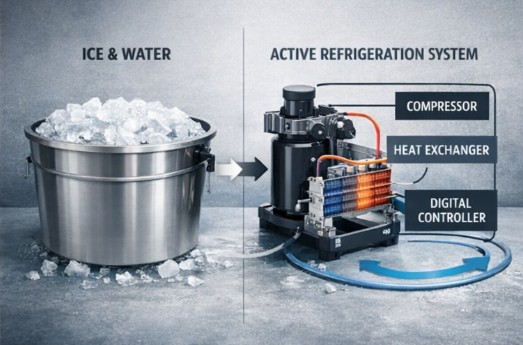
To understand the manufacturing requirements of the modern ice bath market, one must appreciate the technological leap from passive to active cooling. Historically, cold therapy relied on the manual addition of ice to water—a method that is thermodynamically effective but operationally inefficient. For commercial facilities, the logistical burden of producing or purchasing hundreds of pounds of ice daily is unsustainable. For residential users, the inconvenience acts as a barrier to adherence.
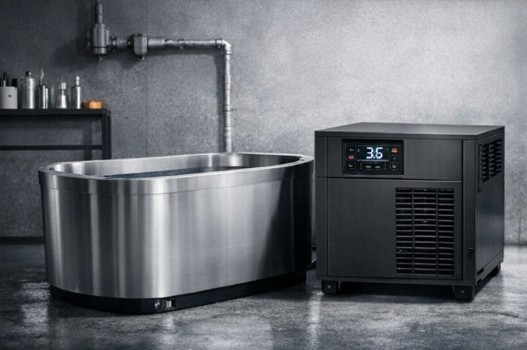
The modern "ice bath machine" solves this via the vapor-compression refrigeration cycle. These units utilize a compressor to circulate a refrigerant (such as R410a, R32, or R290) through a heat exchanger, absorbing thermal energy from the circulating water and rejecting it into the ambient air via a condenser. This shift transforms the product from a simple plastic container into a sophisticated appliance akin to a commercial refrigerator or HVAC system.
This technological layering introduces a new set of sourcing criteria. Brands are no longer just evaluating the durability of a rotomolded shell; they must now evaluate the duty cycle of a compressor, the corrosion resistance of a brazed plate heat exchanger, the ingress protection (IP) rating of a digital controller, and the efficacy of an ozone sanitation loop. The supply chain thus becomes a complex web of component suppliers—compressor manufacturers, PCB fabricators, metalworkers, and assembly houses—managed by the primary OEMpartner. Understanding this ecosystem is prerequisites for any brand attempting to customize a product effectively.
2. OEM vs. Private Label: What's the Real Difference?
In the lexicon of global manufacturing, the terms "OEM," "ODM," "White Label," and "Private Label" are frequently used interchangeably by marketing agencies and sales representatives. However, for a brand owner structuring a manufacturing agreement, these terms represent distinct business models with vastly different risk profiles, capital requirements, intellectual property (IP) implications, and timelines. A precise understanding of these distinctions is the foundational step in selecting a partnership strategy that aligns with the brand's financial resources and long-term vision.
2.1 White Label / Private Label: The "Off-the-Shelf" Model
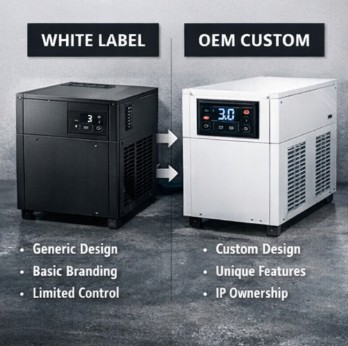
The White Label model, often synonymous with Private Labeling in the context of standard catalog products, represents the path of least resistance. In this arrangement, a brand selects a fully developed, pre-manufactured product from a supplier's existing portfolio. The manufacturer retains ownership of the design, the tooling, the certifications, and the underlying intellectual property. The "customization" is strictly cosmetic: the application of the buyer's logo via silk-screening, a change in the color of the external housing, or the design of the cardboard retail packaging.
Mechanism of Action: In the ice bath industry, this model is ubiquitous. A handful of large manufacturers produce a standard 0.8HP or 1HP chiller unit—often a black rectangular box with a digital display—that is sold to dozens of different brands globally. The brand owner receives a catalog, selects "Model X," sends a vector file of their logo, and receives a container of finished goods 30 to 45 days later.
Strategic Advantages:
Speed to Market: Because the engineering validation, tooling, and pilot production runs have already been completed, brands can launch a product in as little as 4 to 8 weeks. This allows for rapid capitalization on emerging trends.
Low Minimum Order Quantities (MOQs): Manufacturers can aggregate orders from multiple private label clients to achieve economies of scale. Consequently, they may allow MOQs as low as 10 to 50 units for white label products, reducing the inventory risk for startups.
Reduced R&D Expenditure: The brand avoids the significant costs associated with prototyping, thermal testing, and certification. The manufacturer theoretically absorbs the engineering risk.
Strategic Disadvantages:
Commoditization and Price Sensitivity: Since the underlying hardware is identical to that of competitors, the brand cannot compete on features or performance. The market quickly devolves into a price war, eroding margins.
Lack of Control: The brand has zero influence over component selection. If the manufacturer decides to switch from a reputable compressor to a cheaper alternative to save costs, the private label buyer has no recourse and may unknowingly sell an inferior product.
Vendor Dependency: The brand builds no intellectual property value. If the relationship with the supplier sours, the brand cannot easily move production to another factory because they do not own the design or the molds.
2.2 OEM (Original Equipment Manufacturer): The Custom Specification Model
The OEM model involves a brand providing a manufacturer with a complete set of specifications, blueprints, or industrial designs for a product that does not yet exist in the supplier's catalog. The factory acts purely as the production arm, executing the brand's vision.
Mechanism of Action: In an OEM relationship, the brand defines every aspect of the ice bath: the geometry of the tub, the material composition of the heat exchanger (eg, upgrading to Titanium), the specific logic of the temperature controller, and the source of critical components (eg, requiring a Panasonic or Mitsubishi compressor). The brand typically pays for the "tooling"—the molds for plastic parts or dies for metal stamping—which grants them exclusivity or ownership of the design.
Strategic Advantages:
differentiation and Defensibility: The resulting product is unique to the brand. Proprietary features, such as a specific ergonomic shape or a patented filtration system, create a competitive moat that white label competitors cannot easily cross.
Quality Control Authority: By defining the Bill of Materials (BOM), the brand can mandate higher quality standards than the factory's default. This is critical for brands targeting the commercial or luxury residential markets.
Brand Equity: Investing in unique industrial design signals maturity and innovation to the market, building deeper brand loyalty.
Strategic Disadvantages:
High Capital Investment: Tooling costs for a custom rotomolded tub or injection-molded chiller housing can range from $10,000 to over $100,000.
Long Lead Times: The development cycle—including CAD design, prototyping, tooling fabrication, and pilot testing—can take 6 to 12 months before the first unit is ready for sale.
Engineering Liability: In a pure OEM model, if the design fails (eg, the specified pump is too weak for the specified filter), the liability often rests with the brand that created the spec, not the factory that followed it.
2.3 ODM (Original Design Manufacturer): The Hybrid Approach
The ODM model occupies the middle ground and is highly prevalent in the appliance industry. Here, the manufacturer has developed a core technology platform (eg, a refrigeration engine and chassis) but allows the brand to significantly customize the exterior design and user interface.
Mechanism of Action: A brand might approach an ODM with a request for a custom-designed tub and housing but utilize the ODM's existing internal refrigeration loop and control board. This reduces the engineering risk of the complex thermodynamic systems while still allowing the brand to present a visually unique product to the consumer. The IP ownership in ODM relationships is often shared or segmented (eg, the brand owns the external design, the factory owns the internal mechanical design).
Comparative Analysis of Manufacturing Models
| Feature | White Label / Private Label | OEM (Original Equipment Mfg) | ODM (Original Design Mfg) |
| Primary IP Ownership | Supplier | Brand (usually) | Shared / Segmented |
| Development Timeline | 1 - 2 Months | 6 - 12+ Months | 4 - 6 Months |
| Customization Scope | Cosmetic (Logo, Color, Packaging) | Full (Structural, Functional, Component) | Partial (Housing, UI, Features) |
| Tooling Investment | $0 - Low | High ($20k - $100k+) | Medium |
| Market Differentiation | Low (Marketing-driven) | High (Product-driven) | Medium/High |
| Margin Potential | Low (Price Competition) | High (Unique Value Prop) | Medium |
| Technical Risk | Low (Supplier responsibility) | High (Brand responsibility) | Medium |
| Best For | Market Testing / Startups | Established Brands / Scale | Rapid Expansion / Mid-tier |
3. What Can Be Customized in an Ice Bath Machine?
When a brand elects to move beyond the constraints of off-the-shelf white labeling, the scope of customization opens significantly. However, every modification carries specific implications for unit cost, production lead time, and system reliability. Successful customization requires a strategic approach, prioritizing changes that deliver tangible value to the target customer—whether that be aesthetic appeal for the luxury home user or rugged durability for the commercial gym operator.
3.1 Aesthetic and Cosmetic Customization
Aesthetic customization is the most common entry point for private label brands. It allows for visual differentiation on the showroom floor and Instagram feed without necessitating fundamental re-engineering of the machine's core mechanics.
Exterior Shell and Enclosure: The housing of the chiller unit and the tub itself are the primary visual touchpoints.
Chiller Housing: Standard white label chillers often utilize basic sheet metal casings. Brands can customize this by specifying matte-finish powder coating, adding acoustic foam lining to reduce noise perception, or utilizing premium materials like marine-grade wood or brushed aluminum to align with high-end sauna aesthetics.
Tub Finishes: For rotomolded polyethylene tubs, brands can select custom resin colors, including Pantone matching or "granite" effects that mimic stone. For stainless steel tubs, finishes can range from electropolished mirror finishes (which resist bacterial adhesion) to brushed satin looks. Wooden cladding (using cedar, teak, or thermowood) is a popular ODM option that adds a natural aesthetic while concealing the insulation layers.
Branding Application: Beyond simple stickers, OEM customization allows for permanent branding. This includes laser etching logos onto stainless steel surfaces, embossing logos directly into the plastic mold of rotomolded tubs, or utilizing high-quality metal badges.
Packaging and Unboxing: For Direct-to-Consumer (DTC) brands, the packaging is part of the product. Customization here involves designing reinforced heavy-duty structural foam to survive shipping, but also creating a branded "unboxing experience" with custom-printed instruction manuals, accessories boxes, and welcome kits.
3.2 User Interface (UI) and Connectivity
As the wellness market shifts towards "smart" technology, the interface between the user and the machine becomes a critical competitive differentiator.
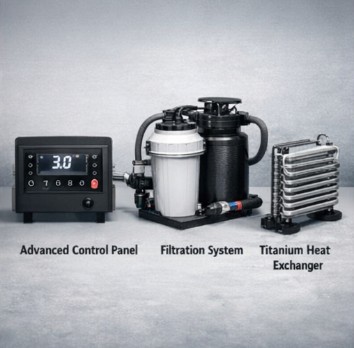
Digital Controllers: The standard "red LED" thermostat found on generic industrial chillers is functional but lacks consumer appeal. OEM brands can upgrade to capacitive touch panels, full-color LCD screens, or OLED displays that offer a more modern user experience. These interfaces can be programmed to show filter life status, water quality metrics (if sensors are present), and error codes in plain English rather than cryptic alphanumeric signals.
App Integration and IoT: Connectivity is a major trend. Many ODM factories now offer "white label" Wi-Fi modules and smartphone applications. These apps connect to cloud backbones (often Tuya or proprietary servers), allowing the brand to skin the app interface with their own colors and logo.
Functionality: Users can schedule cooling cycles (eg, "Ready by 6 AM"), monitor current temperatures remotely, and receive push notifications for maintenance (eg, "Change Filter").
OEM Advantage: A custom app ecosystem increases customer "stickiness" and allows the brand to push firmware updates to the chiller to optimize performance or patch bugs post-sale.
3.3 Functional and Performance Customization
This level of customization defines the product's actual capability and reliability. It is where the "OEM" partnership delivers the most value for brands targeting performance-oriented customers.
Cooling Capacity and Compressor Selection:
Horsepower (HP): While 0.5HP or 0.8HP is standard for residential units, commercial environments often require 1HP or 1.5HP compressors to handle higher thermal loads. Brands can specify the compressor capacity based on their target recovery times (eg, "Cool 100 gallons from 60°F to 40°F in under 2 hours").
Component Brand: Brands can mandate the use of specific compressor brands known for reliability, such as Panasonic, Mitsubishi, or Hitachi, rather than accepting generic unbranded components.
Filtration Systems:
Media Type: Standard chillers often use small, mesh strainers that clog easily. OEM customization allows for the integration of large-capacity pleated cartridge filters (eg, 25 or 50 sq ft) or bag filters that can hold more debris before restricting flow.
External vs. Internal: Brands can design systems where the filter housing is easily accessible for the user, perhaps integrated into the top deck of the tub, rather than hidden behind a screw-panel on the chiller.
Sanitation Technology:
Ozone Generation: Brands can integrate ozone generators to reduce chemical usage. Advanced customization involves specifying the ozone output (mg/hr) and ensuring the inclusion of a Venturi injector and a mixing chamber (contact tank) to dissolve the gas into the water effectively, rather than just bubbling it out.
UV-C Sterilization: UV light provides non-chemical disinfection. Customization involves selecting the wattage of the UV bulb and ensuring the flow chamber allows sufficient "contact time" for the light to neutralize pathogens.
Refrigerant Selection: With tightening environmental regulations (such as the AIM Act in the US and F-Gas regulations in the EU), brands can specify eco-friendly refrigerants. Moving from R410a (high GWP) to R32 or R290 (Propane) future-proofs the product against regulatory bans and appeals to eco-conscious consumers.
3.4 Structural Customization
Tub Geometry and Ergonomics: Brands can invest in molds to create tubs with specific ergonomic features—molded seats, armrests, multi-level steps for entry/exit, or specific dimensions to fit through standard doorways (a common pain point). XL models for taller athletes (eg, NBA/NFL players) require custom lengths.
Insulation Quality: Standard white label tubs might use thin sheets of insulation. OEM brands can specify "closed-cell" polyurethane foam injection or double-walled vacuum insulation (for steel tubs) to maximize thermal retention. This reduces the workload on the chiller and prevents exterior condensation (sweating), which is crucial for indoor installations.
4. What Should Not Be Customized Without Engineering Support?
A dangerous trap for marketing-led brands is requesting modifications that disrupt the delicate thermodynamic and hydraulic balance of a chiller system. Manufacturers, eager to secure a contract, may sometimes agree to these requests even if they compromise the product's longevity. It is vital to understand which parameters are "engineering critical."
4.1 Flow Rate and Pump Sizing: The Freezing Nexus
The flow rate of water through the chiller's heat exchanger is the single most critical operational variable.
The Engineering Reality: Chillers are designed with a specific "flow curve." The water must move fast enough to create turbulent flow, which scrubs the cold energy off the heat exchanger walls.
The Risk: Brands often request quieter pumps or attempt to add restrictive external filtration (like multiple pre-filters) without upgrading the pump. This increases "head pressure" and reduces flow.
The Consequence: If the flow drops below the design threshold, the water in contact with the refrigerant coils will freeze almost instantly. Water expands when it turns to ice, and this expansion can rupture the internal copper or titanium piping. This catastrophic failure results in water entering the refrigeration loop (destroying the compressor) and refrigerant leaking into the atmosphere.
Guideline: Never alter the pump specification, hose diameter, or filtration density without a corresponding recalculation of the system's pressure drop and verification that the flow rate remains in the safe zone of the heat exchanger's performance envelope.
4.2 Heat Exchanger Geometry and "Compactness"
There is a constant market pressure to make chillers smaller, lighter, and more portable (eg, "carry-on" size).
The Engineering Reality: Heat rejection relies on surface area. The condenser (the radiator part) needs a certain amount of fin area to dissipate the heat pulled from the water plus the heat generated by the compressor.
The Risk: Shrinking the physical chassis often forces the factory to use smaller condenser coils or pack components too tightly.
The Consequence: A "compact" unit might work in a climate-controlled lab, but in a real-world scenario—like a 95°F garage in Texas—it will be unable to shed heat. The "head pressure" will spike, causing the compressor to overheat and trip its thermal overload safety switch. Repeated tripping leads to early compressor death.
Guideline: Do not prioritize form factor over thermal physics. Ensure the unit has adequate "breathing room" and condenser surface area for the worst-case ambient temperature (often rated at 105°F or 110°F).
4.3 Compressor Logic and Temperature Hysteresis
Brands often demand "precision" control, requesting that the chiller maintain exactly 37°F with zero variance.
The Engineering Reality: Compressors are not designed to turn on and off rapidly. They need a minimum runtime to circulate oil and cool the motor windings.
The Risk: Setting the "hysteresis" or "deadband" (the temperature difference required to trigger the compressor) too low (eg, 0.5 degrees).
The Consequence: This causes "short cycling." The compressor kicks on for 30 seconds, turns off, then kicks on again a minute later. This massive inrush of electrical current overheats the start windings and prevents oil return. A compressor built to last 10 years can burn out in 6 months under short-cycling conditions.
Guideline: Accept a standard hysteresis of 2°F to 3°F (eg, cools to 37°F, turns off, turns back on at 40°F). This protects the machinery.
4.4 Material Substitution in the Water Path
To save costs or improve aesthetics, brands might request specific fittings or valves.
The Engineering Reality: The "wetted path" must be chemically compatible with the intended sanitation method.
The Risk: Using standard brass, aluminum, or galvanized fittings in a system designed for ozone or salt water.
The Consequence:
Ozone: It is a powerful oxidizer. It will eat through standard rubber O-rings and corrode brass into a green sludge within weeks.
Salt Water: If a brand markets the tub as "Epsom salt compatible," standard stainless steel or copper heat exchangers will fail.
Galvanic Corrosion: Mixing dissimilar metals (eg, connecting a copper pipe to an aluminum heat exchanger) creates a battery when water flows through it, causing rapid corrosion of the anode metal (the aluminum).
Guideline: Ensure the entire wetted path is homogeneous or compatible. For high-end/commercial units, this usually means an all-plastic path (PVC/nylon) leading to a Titanium heat exchanger.
5. Commercial-Grade Performance and Durability Considerations
The usage profile of a residential ice bath differs radically from that of a commercial unit installed in a gym, wellness center, or sports club. Brands targeting the B2B market must customize their OEM specifications for durability and capacity, moving far beyond the requirements of the home consumer.
5.1 The "Bather Load" Challenge and Thermal Recovery
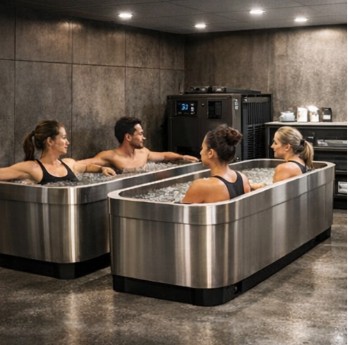
A home user might plunge once a day. A commercial unit may see 30 to 50 users daily.
Thermal Load Calculation: A human body at 98.6°F entering a 40°F tub introduces a significant heat load. A typical plunge might add 300 to 500 BTUs of heat (depending on body mass and duration).
The Problem: A standard residential chiller (0.5HP) might have a cooling capacity of ~4,000 BTU/hr. If 5 people plunge in a single hour, they introduce ~2,500 BTUs. The chiller can barely keep up. If 10 people plunge, the water temperature will steadily rise, leading to customer complaints ("It's not cold enough").
Commercial Solution: Commercial customization requires sizing the compressor for "recovery time." This often means moving to 1HP (approx. 9,000-12,000 BTU/hr) or 1.5HP units. It also may involve the concept of "ice banking"—cooling the water to a buffer temperature (eg, 34°F) during downtime to absorb peak loads.
5.2 Sanitation and Filtration Load
Fifty users introduce fifty times the sweat, skin oils, hair, lotions, and bacteria of a single user.
Filtration: A small residential pleated filter will clog within hours in a commercial setting, restricting flow and freezing the chiller (as discussed in Section 4.1). Commercial units require large-capacity filters (50+ sq ft) or sand/glass media filters that can be backwashed.
Sanitation: Ozone alone is often insufficient for high bather loads because it has a short half-life and leaves no residual protection. Commercial OEM specs often need to accommodate automatic dosing systems for chlorine or bromine to maintain a measurable sanitizer residual, as required by many local health codes. This dictates the material choice (see below).
5.3 Corrosion Resistance: 304 vs. 316 Stainless Steel
For brands using stainless steel tubs, the choice of alloy is critical for commercial durability.
304 Stainless Steel: The standard for "food grade" applications and residential appliances. It is resistant to fresh tap water. However, it is vulnerable to chloride attack.
316/316L Stainless Steel: Contains 2-3% Molybdenum, which drastically increases resistance to chlorides (salts) and acids.
The Reality: In a commercial gym, the water will contain sweat (salt) and chlorine. If a 304 tub is used, it will likely develop "tea staining" or surface rust at the waterline and weld points within months. For any commercial or "salt-compatible" product, 316L steel is a mandatory OEM upgrade, despite the higher material cost.
5.4 Condensation and Moisture Management
Chilling water to 3°C (37°F) in a gym environment (often humid) creates a massive condensation potential.
The Phenomenon: Every pipe, hose, and surface colder than the dew point will sweat. A chiller without adequate internal insulation will drip water onto its own electronics (PCBs, relays), causing short circuits and corrosion.
OEM Customization: Commercial specs should require "closed-cell" elastomeric foam insulation (eg, Armaflex) on all internal cold piping. Tubs must be heavily insulated not just for thermal retention, but to prevent the outer shell from sweating and creating slip hazards on the facility floor.
5.5 Duty Cycle and Component Life
Residential electronics are rarely designed for 100% duty cycles (running 24/7).
Fans: The cooling fans in cheap chillers are often "sleeve bearing" types rated for intermittent use. In a 24/7 commercial application, these bearings dry out and seize. Commercial specs should demand "ball bearing" fans (eg, from brands like EBM-Papst) rated for 40,000+ hours of continuous operation.
Pumps: Magnetic drive pumps (mag-drive) are preferred over shaft-seal pumps for continuous duty, as they have no mechanical seal to wear out and leak over time.
6. Compliance, Certification, and Regional Requirements
Perhaps the most overlooked risk in private labeling is regulatory compliance. Importing and selling a high-voltage electrical appliance that mixes electricity and water is fundamentally different from importing a yoga mat. Non-compliance can lead to customs seizures, liability lawsuits, and the inability to sell to commercial clients.
6.1 Electrical Safety Standards (UL / CE / ETL)
In the United States, electrical equipment installed in commercial facilities (gyms, spas, offices) must typically be "Listed" by a Nationally Recognized Testing Laboratory (NRTL) such as UL (Underwriters Laboratories), ETL (Intertek), or CSA.
The Trap: Many Asian factories claim their product is "Certified." Upon inspection, this often turns out to be a CE (Conformité Européenne) mark. CE is a self-declaration required for the European Union; it holds no legal weight in the US electrical code. A US fire marshal or insurance inspector can shut down a gym for using non-UL/ETL listed equipment.
The Standard: The relevant safety standard for commercial refrigeration equipment is typically UL 60335-2-89 (Commercial Refrigerating Appliances) or UL 60335-2-40 .
The Process: Achieving a true UL/ETL listing for a private label product is expensive ($15,000 - $30,000) and time-consuming (3-6 months). It involves destructive testing of the unit to ensure it doesn't catch fire or electrocute users under failure conditions.
Component vs. System: Brands must not be fooled by a factory saying, "We use a UL compressor." A UL-listed component does not make the system UL-listed. The entire assembly (chiller + pump + controller + wiring) must be tested as a system.
6.2 Chemical and Sanitation Regulations
Ozone Regulations: Ozone is a powerful sanitizer but also a regulated air pollutant. The EPA and OSHA have strict limits on ozone concentration in indoor air.
OEM Requirement: An ozone system must be designed to dissolve the gas into the water (using a contact tank and degas valve) rather than releasing it into the air. "Ozone generators" that simply bubble gas into the tub are potential liability hazards in small, unventilated recovery rooms.
NSF 50: In some US jurisdictions (like Florida and California), commercial pools and spas (which includes cold plunges) must comply with NSF 50 standards. This covers materials toxicity, water circulation, and filtration turnover rates. Selling a non-NSF compliant tub to a commercial project can result in the health department refusing to issue an operating permit.
6.3 Import Duties and HTS Codes (US Market)
The trade environment between the US and China significantly impacts the landed cost of ice bath machines.
HTS Classification: Ice bath chillers typically fall under Harmonized Tariff Schedule (HTS) codes such as 8418.69 (Refrigerating or freezing equipment, other).
Section 301 Tariffs: As of the current trade policies, many industrial goods from China, including refrigeration equipment, are subject to "Section 301" punitive tariffs. This can add an additional 25% duty on top of the standard import duty.
Implication: A chiller with an FOB price of $500 might seem cheap. But after adding freight ($100), standard duty (~2.6%), Section 301 tariff (25% = $125), and harbor fees, the landed cost rises to nearly $750. Brands that fail to account for this 25% variance in their margin analysis often find their business model unsustainable.
6.4 Refrigerant Regulations (GWP Phasedowns)
Environmental regulations are aggressively phasing out hydrofluorocarbons (HFCs) with high Global Warming Potential (GWP).
The Shift: R410a, long the industry standard, is being restricted in the US (under the AIM Act) and Europe (F-Gas Regulation).
Future-Proofing: Designing a new OEM product around R410a is investing in obsolescence. Brands should guide their OEM partners to design systems using low-GWP alternatives like R32 (mildly flammable but efficient) or R290 (Propane - highly efficient and eco-friendly, but with strict charge limits due to flammability).
7. Supply Chain Stability, MOQ, and Long-Term Support
Selecting a manufacturing partner is not a transactional event; it is the establishment of a supply pipeline. The stability of this pipeline determines the brand's ability to scale.
7.1 Minimum Order Quantities (MOQ)
MOQ is the leverage point in any OEM negotiation.
White Label Reality: Suppliers are often willing to sell small batches (10-50 units) of white-label goods because the base product is produced continuously for multiple clients.
OEM Reality: For true custom products (eg, a tub with a unique shape), factories require higher MOQs (100-500 units) to justify the disruption of their assembly line and the setup of custom tooling.
Strategy: Brands can often negotiate tiered MOQs. For example, paying a higher per-unit "sample surcharge" for a pilot run of 50 units, with a contractual agreement to order 200 units subsequently.
7.2 Lead Times and Logistics
Ice bath machines are large, heavy, and contain compressed gas (refrigerant). This complicates logistics.
Production: Standard production lead time is 30-45 days. Custom OEM orders may take 60-90 days for the first run due to component sourcing.
Shipping: Air freight is prohibitively expensive for heavy chillers ($1,000+ per unit). Ocean freight is the only viable commercial option, adding 30-45 days to the supply chain. This means a brand has a cash conversion cycle of 3-4 months (Deposit -> Production -> Ocean -> Delivery -> Sale).
The "Last Mile": A palletized ice bath cannot be delivered by a standard mail carrier. It requires LTL (Less-Than-Truckload) freight with lift-gate service. Delivering to a residential driveway requires "curbside" or "white glove" logistics partners. Brands must account for this complexity and cost ($200-$500 per delivery) in their pricing model.
7.3 Spare Parts and Warranty Support
Every mechanical device will eventually fail. The strategy for handling this failure defines the brand's reputation.
The Gap: Most Chinese factories offer a warranty that requires the defective unit to be "returned to the factory" for repair. This is economically impossible for a US brand; shipping a 60lb chiller back to China costs more than the unit itself.
The Solution:
Spare Parts Allowance: Negotiate a contract where the factory provides a percentage of free spare parts (eg, 2% of PCBs, pumps, and sensors) with every container order.
Local Repair: Design the unit with non-proprietary fittings and accessible interiors so that local HVAC or appliance technicians can perform repairs. If the OEM uses a proprietary glued manifold that cannot be serviced, a simple leak turns the entire unit into electronic waste.
Stocking: The brand must warehouse key components (capacitors, displays, flow sensors) domestically to ensure rapid support for customers.
8. Common OEM Mistakes Brands Should Avoid
8.1 The "Golden Sample" Trap
The Scenario: The factory sends a hand-assembled, perfectly polished prototype (the "Golden Sample"). The brand approves it. The mass production arrives with rattles, scratches, and loose screws.
The Reality: Mass production is done by line workers, not the head engineer.
Avoidance: Never approve mass production based solely on a prototype. Require a "Pilot Run" (eg, 10-20 units) to test the assembly line process and Quality Control (QC) consistency before committing to a container load.
8.2 Ignoring Galvanic Corrosion in Design
The Scenario: A brand designs a beautiful premium stainless steel tub but allows the factory to use a standard aluminum-finned heat exchanger or brass fittings in the loop.
The Reality: When dissimilar metals are electrically connected via water (an electrolyte), a battery is created. The anode (the less noble metal, like aluminum) will corrode sacrificially.
Avoidance: Ensure the entire "wetted path" is galvanically compatible. Using a Titanium heat exchanger eliminates this risk, as Titanium is highly noble and resistant to galvanic attack in this context.
8.3 Underestimating Noise Levels
The Scenario: The spec sheet says "<45dB". The customer installs it in a quiet bedroom or spa, and it sounds like a vacuum cleaner.
The Reality: Noise ratings are often measured in ideal lab conditions. Cheap fans and vibrating compressor mounts create resonance.
Avoidance: Specify branded, low-noise fans. Require rubber isolation mounts for the compressor. Test the unit in a quiet, real-world room, not a noisy factory floor.
8.4 The "All-in-One" Integration Risk
The Scenario: Designing a tub where the chiller is permanently built into the sidewall (like a refrigerator).
The Reality: When (not if) the chiller needs service or replacement, the entire tub is rendered useless. It is difficult to ship the whole tub for repair.
Avoidance: Modular design is superior. Keep the chiller as a separate, detachable unit connected by hoses (or hidden in a compartment but removable). If the chiller fails, a replacement can be shipped immediately while the customer keeps the tub.
9. Conclusion: Building a Scalable Private Label Ice Bath Business
The transition from a "dropshipping" mindset to a legitimate OEM brand requires a fundamental shift in focus from marketing to operations and engineering. The ice bath market is maturing; while early adopters may have tolerated DIY setups and glitchy components, the next wave of mass-market and commercial clients will demand the reliability, safety, and seamless support of a true home appliance.
For brands entering this space, success lies in the details of the execution:
Define the Business Model: Clarity on whether to pursue White Label (speed/low risk) or OEM (IP/differentiation) is essential. Mixing the two without a strategy leads to confusion and wasted capital.
Respect the Physics: Work with the thermodynamics of cooling, not against them. Engineering decisions regarding flow rates, insulation, and compressor sizing must take precedence over aesthetic whims.
Prioritize Compliance: In a litigious society, selling uncertified electrical appliances is a ticking time bomb. Investing in UL/ETL listings and proper chemical safety is not an optional cost—it is an insurance policy for the brand's future.
Secure the Supply Chain: Build a relationship with the factory that goes beyond transactional orders. Secure spare parts, negotiate rigorous QC standards, and plan financially for the realities of tariffs and logistics.
The brands that will dominate the next decade of the recovery industry are those that treat the ice bath not merely as a bucket of cold water, but as a precision medical-grade appliance. They will be the ones who customize not just the color of the shell, but the reliability of the engine inside.
Table 1: Key Data Points for Decision Making
| Parameter | Residential Standard (White Label) | Commercial Standard (OEM Target) | Why it Matters |
| Compressor Power | 0.5 HP - 0.8 HP | 1.0 HP - 2.0 HP | Recovery speed after multiple users. |
| Heat Exchanger | Copper or Stainless Steel | Titanium | Resistance to chlorine/salt corrosion. |
| Flow Rate | 500 - 800 GPH | 1,000+ GPH | Prevents freezing; ensures efficient heat transfer. |
| Sanitation | Cartridge Filter + Ozone | Sand Filter + Ozone + Auto-Dosing | Handles high bather load bio-waste. |
| Certification | CE (Europe only) | UL 60335-2-89 / ETL | Legal requirement for US commercial use. |
| Duty Cycle | Intermittent (4-8 hrs/day) | Continuous (24/7) | Commercial units must run overnight. |
| Warranty Terms | Return to Base (China) | Parts Allowance / Local Support | Shipping units to China is cost-prohibitive. |
At Quanguan, we work directly with gyms,recovery studios, and professional facilitiesto ensure commercial ice bath systems areinstalled correctly from day one. With hands-on manufacturing experience and adeep understanding of real-worldinstallation challenges, our team helpsclients avoid common mistakes, reducelong-term operating costs, and achievestable, reliable performance.
lf you are planning a commercial ice bath installation or evaluating systemrequirements for your facility, contact Quanguan to discuss your project and getpractical guidance tailored to your spaceand usage needs.