
1. Introduction: The Commercial Recovery Gap
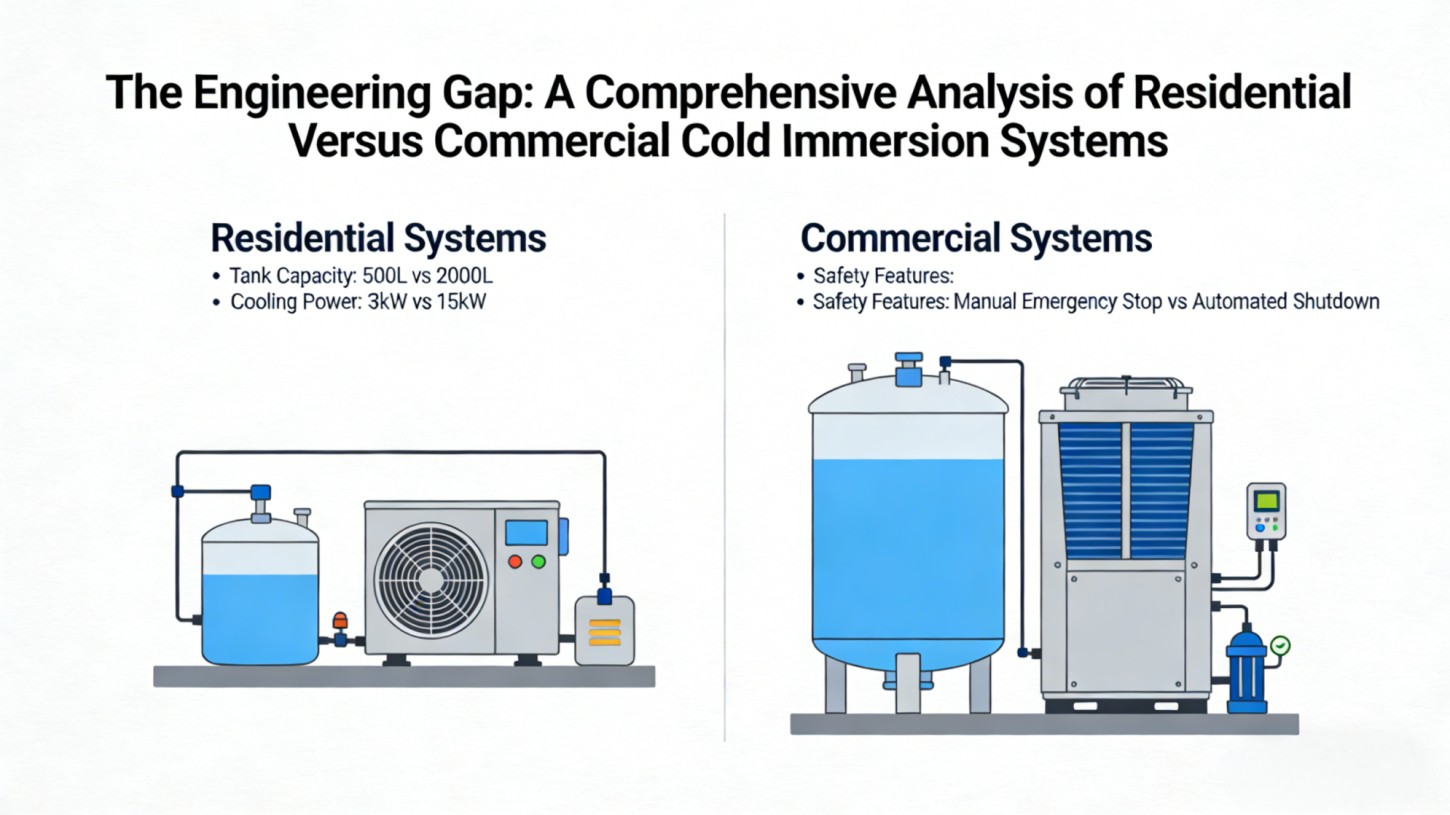
The global wellness economy has surged to a valuation exceeding $6.3 trillion, driven in large part by the mainstream adoption of contrast therapy and cold water immersion (CWI) protocols.1 Once the exclusive domain of elite athletic training centers, cold plunge therapy has permeated commercial gymnasiums, luxury spas, and holistic wellness centers. For facility operators, the integration of cold therapy infrastructure represents a potent mechanism to enhance member retention, increase revenue per square foot, and differentiate service offerings in a saturated market. However, a critical operational disparity—termed the "Recovery Gap"—has emerged: the profound disconnect between the robust, industrial-grade requirements of high-traffic facilities and the limitations of the residential-grade equipment frequently selected to fulfill them.2
The fundamental error in equipment selection often stems from a misunderstanding of usage profiles. In a residential context, a cold plunge is a static amenity, utilized perhaps once or twice daily by a known user group. The equipment enjoys a thermal and biological recovery window of approximately 23 hours. In stark contrast, a commercial environment operates as a dynamic, high-throughput system characterized by "back-to-back" loading.4 Commercial usage compresses the recovery window—the time available for the chiller to remove the heat introduced by a bather and for the filtration system to sanitize the water volume—from hours to mere minutes.

This report provides an exhaustive technical analysis of the failure modes associated with deploying standard, residential-grade ice bath machines in commercial environments. It explores the thermodynamic, mechanical, and biological stresses that define high-bather-load settings, contrasting these with the design envelopes of off-the-shelf units. Through a detailed examination of thermal load calculations, filtration fluid dynamics, material science, and building systems integration, this document establishes the engineering case for custom, commercial-grade cold therapy solutions. The analysis reveals that "standard" units suffer catastrophic performance degradation when subjected to the 50–75 daily users common in commercial settings, manifesting as thermal instability, biological risk, and mechanical failure.5 Consequently, the higher upfront capital expenditure (CAPEX) of custom solutions is offset by superior operational reliability, reduced liability, and lower long-term operating expenses (OPEX).
2. Thermodynamics of Commercial Recovery
The primary performance metric for any refrigeration system is its ability to maintain a set point temperature against a given heat load. In commercial ice bath applications, the heat load is not static; it is a dynamic variable driven by user throughput. Standard residential chillers are engineered for static maintenance, whereas commercial systems must be engineered for active heat rejection.
2.1 The Physics of Heat Rejection and Thermal Load
To understand the failure of standard units, one must quantify the thermal load. The cooling capacity of a chiller is measured in British Thermal Units per hour (BTU/hr) or Watts. The fundamental requirement is to remove heat from the water faster than it is added. Heat enters the system through three primary vectors: metabolic heat transfer from bathers, ambient conduction and convection, and mechanical heat generated by system pumps.6
The human body functions as a heat engine. When immersed in cold water, the body attempts to maintain homeostasis by radiating heat into the surrounding fluid. A human body can transfer significant thermal energy into the water, particularly post-workout when core temperature and skin surface temperature are elevated.7 In a residential setting with a single user, this heat input is negligible relative to the 24-hour cycle. However, in a commercial facility with 50 to 75 users per day, the bathers act as continuous heating elements.
We can model the thermal load using the specific heat capacity of water (), which is approximately or . The formula for the heat load () required to cool a volume of water is:





Where is the mass of the water and is the required temperature drop. However, the critical metric for commercial operations is not just total energy, but the rate of removal, or Recovery Time. The recovery time is calculated as:



Here, 8.33 represents the weight of a gallon of water in pounds.8
Consider a standard commercial scenario involving a 100-gallon (378-liter) tub. If a series of users raises the water temperature by 10°F (approx. 5.5°C) over a peak hour, the system must remove that heat rapidly to prevent thermal drift. A standard residential chiller, typically rated at 0.5 HP (approx. 5,000 BTU/hr), would require significant time to recover this temperature deficit:
A recovery time of nearly two hours is unacceptable in a gym environment where users may be waiting in line with 2-minute intervals between sessions. The result is that subsequent users experience progressively warmer water, negating the therapeutic benefits of the immersion. In contrast, a commercial chiller sized at 1.5 HP to 2.0 HP (approx. 12,000 to 18,000 BTU/hr) reduces this recovery time drastically, maintaining the set point even under heavy load.7

2.2 Thermal Drift and the "Death Spiral" of Air-Cooled Units
Standard residential units are almost exclusively "air-cooled," meaning they utilize a fan to blow ambient air over a condenser coil to reject heat. The efficiency of these units is heavily dependent on the ambient air temperature of the room in which they are installed.
In a small, enclosed recovery room typical of many gyms or spas, an air-cooled chiller rejects heat directly into the occupied space. This creates a positive feedback loop:
The chiller operates to cool the water, rejecting heat into the room.
The ambient room temperature rises.10
As the ambient temperature increases, the chiller’s condensing temperature rises, reducing its cooling efficiency and capacity.
The chiller must run longer to achieve the same cooling effect, rejecting even more heat into the room.
This phenomenon, known as the "thermal death spiral," often leads to the room temperature exceeding the chiller’s operating envelope. Once the ambient temperature surpasses roughly 35°C (95°F), standard residential chillers suffer severe performance derating. The unit effectively runs continuously without achieving the target water temperature, leading to high-pressure safety cutouts or compressor burnout.11 Commercial custom solutions circumvent this by utilizing remote condensers (split systems) or water-cooled condensers connected to a building’s central cooling loop, ejecting heat outside the conditioned space.12
2.3 Chiller Sizing Rules of Thumb
The industry has developed empirical rules for sizing chillers based on volume and usage. While residential setups may suffice with 1 HP per 300–400 liters, commercial environments require significantly more aggressive sizing to handle the dynamic load.
Undersized chillers struggle to maintain target temperatures (e.g., 3–8°C) during full sessions because the rate of heat ingress from multiple bodies exceeds the rate of heat removal.7 For commercial operators, undersizing the chiller is a false economy that results in a compromised product and eventual equipment failure.
3. Sanitation Engineering and Water Quality
Perhaps the most critical risk factor in commercial cold plunge operations is biological safety. There is a pervasive and dangerous misconception that "cold water kills bacteria." In reality, cold temperatures merely retard bacterial metabolic rates; they do not sterilize the water. Many pathogens, including Pseudomonas aeruginosa and Staphylococcus, can survive and even thrive in cold, damp environments, particularly when introduced to warm, organic-rich micro-environments created by entering bathers.2
3.1 Bather Load and Contaminant Introduction
In a commercial setting, the "bather load"—defined as the cumulative amount of organic matter introduced into the water—is exponential compared to home use. Contaminants include sweat, skin cells, body oils, lotions, cosmetics, and trace fecal matter. A study of distance runners revealed that 12% experienced fecal incontinence, highlighting the potential for severe contamination in athletic recovery settings.15
When these contaminants are introduced into a shared vessel, they provide a nutrient source for bacterial growth. Without aggressive filtration and sanitation, bacteria adhere to the tub surfaces and internal piping, forming biofilms. These biofilms act as protective matrices that are resistant to standard chemical treatments, requiring mechanical scrubbing or high-dose shock treatments to remove.16
3.2 Filtration Physics: Flow Rates and Media Types
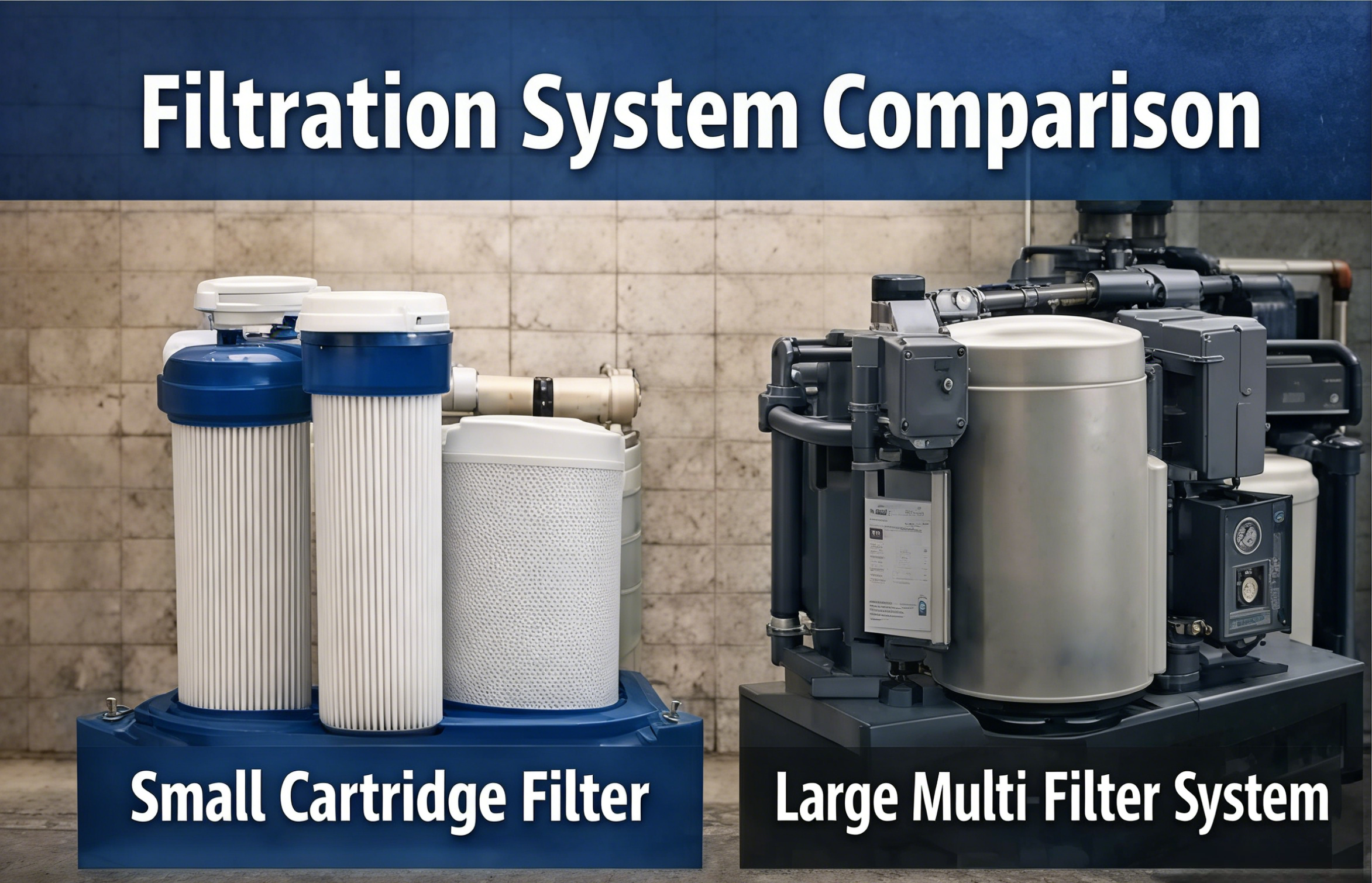
The primary defense against particulate contamination is the filtration system. Standard residential units typically employ pleated paper cartridge filters, often with dimensions of 10" x 2.5". These filters are designed for low-flow, low-particulate environments and are wholly inadequate for commercial use.
Failure Modes of Residential Filters in Commercial Use:
Rapid Fouling: In a gym environment, a small paper filter can become saturated with body oils and debris within a single day of heavy use.
Flow Restriction: As the filter clogs, the pressure drop across the filter increases, causing a drastic reduction in flow rate.
Freezing Risk: Reduced flow rate through the chiller’s heat exchanger is a primary cause of catastrophic failure. If water moves too slowly through the freezing barrel, it can freeze solid, expanding and rupturing the heat exchanger, which leads to a total loss of the chiller and potential refrigerant leaks.4
Commercial Custom Solutions:
Commercial systems mandate robust filtration architectures derived from public pool standards.
Media Surface Area: Commercial chillers utilize filters with significantly larger surface areas, such as 50 sq. ft. cartridges, to increase debris holding capacity and extend maintenance intervals.4
Turnover Rate: The turnover rate is the time required to filter the entire volume of water in the tub. While residential targets may be 60+ minutes, commercial health codes and best practices dictate turnover rates of 15–30 minutes to ensure rapid removal of contaminants.17
Pump Performance: To achieve these high turnover rates through dense filter media, commercial systems employ high-head centrifugal pumps rather than the low-power magnetic drive pumps found in residential units.18
3.3 Advanced Oxidation Processes (AOP) vs. Standard Sanitation
Chemical sanitation (chlorine or bromine) is the baseline for water safety, but in cold water, chemical reaction rates are slower, reducing their efficacy. Furthermore, high chemical concentrations can lead to skin irritation and unpleasant odors, which detract from the premium wellness experience.
Standard residential units often include a low-output UV-C bulb or a passive ozone generator. These are insufficient for high-traffic sanitation.
UV Limitations: UV sterilization relies on "dwell time" (exposure duration) and water clarity (turbidity). If the flow rate is too fast or the water is cloudy from body oils, pathogens are shielded from the UV light and survive.19 Standard UV bulbs also have limited lifespans and require frequent replacement.
Ozone Issues: Residential ozone injectors often suffer from poor mass transfer, meaning the ozone gas does not effectively dissolve into the water to react with contaminants. Instead, it off-gasses, potentially irritating users' respiratory systems without sanitizing the water.20

The Commercial Standard: AOP Custom commercial solutions increasingly utilize Advanced Oxidation Process (AOP) systems. AOP combines high-output UV-C light with ozone injection to generate hydroxyl radicals. Hydroxyl radicals are among the most powerful oxidizers known, capable of destroying oxidation-resistant pathogens like Cryptosporidium and breaking down organic chloramines that cause "pool smell".21 This technology ensures water remains crystal clear and pathogen-free even under heavy bather loads, surpassing the capabilities of standalone chlorine or UV systems.
3.4 Regulatory Compliance: NSF/ANSI 50
For public facilities, compliance with local health codes is not optional; it is a legal requirement. Most jurisdictions reference NSF/ANSI 50 ("Equipment for Swimming Pools, Spas, Hot Tubs and Other Recreational Water Facilities") as the benchmark for safety.23
Certified Components: Commercial systems must be built using NSF-certified pumps, filters, and valves.
Surface Skimming: Commercial codes typically require surface skimming to remove floating debris (hair, oils) before it sinks. Most residential cold plunges lack surface skimmers entirely, relying on low, submerged suction intakes that fail to capture floating contaminants.14
Chemical Feeders: Automated chemical dosing systems, often required by code to maintain consistent pH and sanitizer levels, are standard on commercial skids but absent on residential units.25
4. Material Science and Structural Durability
The longevity of a commercial ice bath is dictated by the materials used in its construction. The aggressive chemical environment of a cold plunge—combining saline sweat, sanitizing chemicals, and constant moisture—rapidly degrades inferior materials.
4.1 Metallurgy: The Critical Distinction Between 304 and 316 Stainless Steel
Many "prosumer" ice baths market themselves as featuring stainless steel liners. However, the specific grade of stainless steel is the determinant factor in the unit's lifespan.
304 Stainless Steel: This is the standard grade used for kitchen appliances and residential sinks. It contains approximately 18% chromium and 8% nickel. While resistant to general oxidation, 304 stainless steel is highly susceptible to chloride corrosion.26
316 Stainless Steel: Often referred to as "marine grade," 316 stainless steel contains an addition of 2% to 3% Molybdenum. This alloying element drastically increases resistance to pitting and crevice corrosion caused by chlorides.28
The Chloride Attack Vector: In a commercial gym, the water chemistry is aggressive. Users introduce sweat, which is saline (chloride-rich). Operators dose the water with chlorine or bromine sanitizers, which are also chloride-based. In a 304 stainless steel tub, this environment leads to "pitting"—localized corrosion that creates microscopic holes in the liner, eventually leading to leaks and structural failure. Solutions with as little as 100 ppm of sodium chloride can begin to corrode 304 stainless steel, whereas 316 stainless steel can withstand significantly higher concentrations.27 For commercial applications, 316L (low carbon) stainless steel is the mandatory specification to ensure asset longevity.30
4.2 Structural Fatigue and Condensation Management
Residential units, particularly those made of inflatable materials, glued acrylics, or modified freezers, are not engineered for the mechanical stress of constant entry and exit.
Rim Loading: Commercial users frequently sit on the rim of the tub before entering or upon exiting. Inflatable units warp under this load; thin acrylics can crack. Commercial tubs typically use double-walled fiberglass, rotomolded plastics, or heavy-gauge steel capable of supporting thousands of pounds of water and human weight without deformation.13
Condensation (Sweating): A cold tub in a warm, humid gym environment acts as a dehumidifier, pulling moisture from the air. Without a comprehensive vapor barrier, condensation forms on the exterior of the liner, inside the cabinetry, and within the insulation. This leads to water pooling on the floor (a slip hazard), wood rot in the cabinet, and mold growth within the unit.32
Psychrometric Engineering: Commercial custom designs employ closed-cell spray foam insulation, which is impermeable to water vapor, preventing internal condensation. Furthermore, they integrate drip trays and drainage channels to capture and route any condensate to the sanitary sewer, protecting the facility's flooring and the unit's electronics.13
5. Mechanical Architecture and Infrastructure Integration
The mechanical systems of a commercial ice bath must be integrated into the facility's broader infrastructure to ensure reliability, efficiency, and ease of maintenance.
5.1 Pump Technology: AC vs. BLDC
The heart of the circulation system is the water pump. Residential units typically use standard Alternating Current (AC) pumps. While inexpensive, these pumps are often loud (approx. 65 dB) and energy-inefficient.
Commercial Standard: Brushless DC (BLDC) Pumps.
Custom commercial solutions increasingly favor BLDC pumps.
Noise Reduction: BLDC pumps operate at significantly lower noise levels (<35 dB), comparable to a quiet library, which is essential for maintaining a relaxing spa ambiance.34
Efficiency: They are up to 70% more energy-efficient than standard AC pumps, reducing long-term operating costs.
Durability: BLDC motors run cooler and have longer operational lifespans, backed by extended warranties compared to the standard 1-year warranty of AC pumps.34
5.2 Power Systems: Three-Phase Efficiency
Commercial facilities often have access to three-phase power (208V/400V), a significant advantage over the single-phase (110V/220V) power found in homes.
Motor Efficiency: Three-phase motors (used in compressors and large pumps) deliver power more smoothly, with constant torque and less vibration. This reduces mechanical wear and extends equipment life.35
Inrush Current: Large single-phase motors draw a massive spike of current (inrush) upon startup, which can trip breakers or cause lights to flicker. Three-phase motors have much lower starting currents and balance the load across the facility's electrical grid, enhancing stability.36
Operating Cost: The superior efficiency of three-phase systems results in lower electricity bills for the operator over the life of the unit.37
5.3 Acoustic Engineering and Remote Installation
Noise pollution is a critical concern in high-end wellness spaces. A standard 1.5 HP air-cooled chiller can generate noise levels of 65–75 dB, equivalent to a vacuum cleaner or loud conversation.38 Placing such a unit in a serene recovery room disrupts the user experience.
Custom Solution: Remote Mechanical Packs (Split Systems)
Commercial custom manufacturing allows for the separation of the "wet" interface (the tub) from the "mechanical" noise (the chiller).
Skid-Mounted Systems: The pumps, chiller, and filtration can be mounted on a skid located in a dedicated mechanical plant room or on the roof, up to 50 feet away from the tub.
Hard Plumbing: Insulated plumbing lines run between the mechanical skid and the tub.
Result: The user experiences a silent, pristine plunge, while the noise and heat of the mechanical equipment are isolated in non-client areas.12
5.4 Building Management System (BMS) Integration
A standard ice bath is an operational "island"—if it fails, staff may not know until a customer complains. Commercial facilities require centralized control and monitoring. BMS Connectivity: Custom chillers can be equipped with communication cards (Modbus, BACnet) to interface with the building’s central automation system.40
Remote Monitoring: Facility managers can track water temperature, flow rates, and system status in real-time from a central dashboard.
Automated Scheduling: The BMS can be programmed to relax temperature set points during closed hours to save energy and ramp them down prior to opening.40
Predictive Maintenance: Alerts for high filter pressure or low flow allow maintenance teams to address issues before they result in downtime.
6. Manufacturing and Commissioning Custom Solutions
The creation of a commercial-grade ice bath is not a retail transaction but a manufacturing and construction project. It follows a rigorous process of design, fabrication, and validation.
6.1 The Fabrication Process
The production of a custom stainless steel vessel involves distinct steps to ensure durability:
Laser Cutting and Forming: 316L stainless steel sheets are precision-cut and bent to form the tub geometry.
TIG Welding: Seams are TIG welded to create a watertight, sanitary bond.
Passivation: This is a critical step often skipped in lower-quality productions. The welded tub is treated with an acid solution to remove free iron from the surface and enhance the natural chromium oxide passive layer that protects against corrosion.42
Insulation Application: Multi-layer insulation, including closed-cell foam, is applied to the exterior to ensure thermal retention and prevent condensation.
Cladding and Cabinetry: The unit is finished with durable, moisture-resistant materials (e.g., composite decking, stone, or tiled finishes) to match the facility's aesthetic.44
6.2 Commissioning and Quality Assurance
Unlike a "plug-and-play" residential unit, a commercial system undergoes a formal commissioning process to verify performance against design specifications.45 Commissioning Checklist:
Pressure Testing: Piping is pressure-tested to identify leaks before walls are closed.
Flow Verification: Digital flow meters verify that the turnover rate meets the design target (e.g., 20 GPM).
Thermal Load Test: The system is tested under load to verify the chiller’s ability to pull down temperature within the specified time.
Electrical Safety Check: Verification of Ground Fault Circuit Interrupter (GFCI) functionality and equipotential bonding to prevent shock hazards.47
7. Regulatory Compliance and Liability Management
Commercial operators assume a duty of care for their clients. Utilizing equipment that is not certified for commercial use exposes the business to significant legal and financial liability.
7.1 UL 1563 and Electrical Safety
Commercial facilities are subject to strict electrical codes. The relevant safety standard for electrical spas is UL 1563.
2025 Scope Expansion: As of January 2025, the scope of UL 1563 has been explicitly expanded to cover "Cold Tubs and Ice Baths".48 This update clarifies testing requirements for these specific appliances.
Certification Requirement: Inspectors look for the UL or ETL certification mark on the entire equipment assembly. Many DIY or residential units may use a UL-listed pump, but the control box and overall assembly are not certified. Using non-listed equipment can lead to red-tagging by inspectors and immediate facility closure.49
Insurance Implications: In the event of an electrical accident or fire, insurance carriers may deny claims if the equipment was not listed for commercial use or was installed in violation of the manufacturer's warranty.51
7.2 Warranty Analysis: The Hidden Cost of Standard Units
Virtually all major residential ice bath manufacturers include clauses that void the warranty upon commercial installation.
Kohler x Remedy Place: "Warranty is void if the Product is installed in a commercial application".51
Plunge (Freeze to Death): Warranty voided by "Use of the Freeze to Death Cold Plunge in a commercial setting".52
LIT Method: Void if failure to replace filters "once per week for commercial use" or if used in commercial settings without specific approval.53
For the commercial operator, this means the asset is effectively uninsured from day one. Any mechanical failure becomes an immediate out-of-pocket expense. In contrast, commercial custom manufacturers offer warranties specifically written for high-traffic usage, often including on-site service guarantees.
7.3 Risk Assessment and Safety Protocols
The physiological shock of entering 3°C water can be intense. Commercial facilities must design for safety to mitigate risks such as cold shock response (gasp reflex) or slips and falls.54
Ingress/Egress: Deep "barrel" style tubs, popular in residential markets, can be entrapment hazards. Commercial custom designs typically feature stairs with handrails and internal seating to allow safe, controlled entry and exit.31
Emergency Protocols: Staff must be trained in recognizing signs of hypothermia or distress. The facility design should allow for unobstructed access to the user in case assistance is needed.56
8. Financial Analysis: CAPEX vs. OPEX
The decision between a standard residential unit and a custom commercial solution is ultimately a financial one. While the custom solution commands a higher initial price, the Total Cost of Ownership (TCO) over a 5-year period significantly favors the engineered approach.
Residential Unit Model:
CAPEX: Low ($5,000 - $8,000).
OPEX: High.
Lifespan: 12-18 months under commercial load.
Energy: Inefficient single-phase motors and heat fighting.
Labor: Daily manual cleaning, filter changes, and water draining.
Revenue Loss: Frequent downtime due to mechanical failure and thermal instability.
Custom Commercial Model:
CAPEX: High ($15,000 - $30,000+).
OPEX: Low.
Lifespan: 5-10+ years.
Energy: High-efficiency 3-phase motors, BMS scheduling, and remote heat rejection.
Labor: Automated fill/drain systems, large-capacity filtration, and AOP sanitation reduce daily maintenance.
Reliability: Robust engineering ensures zero downtime, protecting revenue streams.
The Cost of Failure:
If a gym charges a premium for recovery access (e.g., $30/month) and has 100 members subscribed, a two-week downtime event due to a broken residential chiller costs $1,500 in direct refunds, plus incalculable damage to the facility’s reputation. Two such failures essentially pay for the price difference between a residential and a commercial unit.
9. Conclusion
The allure of low-cost, residential ice bath units is a false economy for commercial operators. The physics of heat rejection, the biology of pathogen transmission, and the mechanics of continuous operation create an environment that standard units are simply not engineered to survive. Standard units are designed for static loads and intermittent use, whereas commercial environments impose dynamic loads and continuous use. The "Recovery Gap" created by undersized equipment results in tepid water, hygiene risks, and frequent mechanical breakdowns.
Custom commercial solutions are strictly required when:
Bather Load exceeds 10 users per day.
Back-to-back usage is expected (recovery windows < 30 minutes).
Installation is in a conditioned, enclosed, or noise-sensitive space.
Hygiene compliance (NSF-50) and Electrical safety (UL 1563) are mandatory.
Operational reliability is directly tied to revenue generation.
For the B2B buyer, the procurement strategy must shift from purchasing an appliance to investing in a mechanical system. Specifying 316L stainless steel, skid-mounted mechanicals, remote cooling, and AOP filtration is not an indulgence; it is a prerequisite for a sustainable, safe, and profitable cold therapy business model.
At Quanguan, we work directly with gyms,recovery studios, and professional facilitiesto ensure commercial ice bath systems areinstalled correctly from day one. With hands-on manufacturing experience and adeep understanding of real-worldinstallation challenges, our team helpsclients avoid common mistakes, reducelong-term operating costs, and achievestable, reliable performance.
lf you are planning a commercial ice bath installation or evaluating systemrequirements for your facility, contact Quanguan to discuss your project and getpractical guidance tailored to your spaceand usage needs.
References (Cited in text):
Not Convinced You Really Need an Ice Bath? Here's Why You're Wrong. - Brass Monkey, https://www.brassmonkey.co/en-us/blogs/journal/not-convinced-you-really-need-an-ice-bath-heres-why-youre-wrong
The Recovery Gap: Why Most Gyms Fail at Ice Bath Recovery - Brass Monkey, https://www.brassmonkey.co/blogs/journal/the-recovery-gap-why-most-gyms-fail-at-ice-bath-recovery
What is the difference between a residential cold plunge & a commercial cold plunge? : r/coldplunge - Reddit, https://www.reddit.com/r/coldplunge/comments/1mxmpud/what_is_the_difference_between_a_residential_cold/
The hidden dangers of choosing the wrong ice bath: A commercial operator's guide, https://www.brassmonkey.co/blogs/journal/the-hidden-dangers-of-choosing-the-wrong-ice-bath-a-commercial-operators-guide
Calculating the Heat Generated by a Recirculating Chiller - Laboratory Supply Network, https://labsup.net/blogs/blog/calculating-the-heat-generated-by-a-recirculating-chiller
Water Chiller for Ice Bath – Practical Buyer's Guide for Recovery, Home & Commercial Use, https://lando-chillers.com/water-chiller-for-ice-bath/
Chiller Tonnage Sizing & Capacity Calculator, https://waterchillers.com/chiller-resources/sizing-information/
What Size Water Chiller for Ice Bath Do You Need? (Complete Guide), https://coldtubchiller.com/what-size-water-chiller-for-ice-bath-do-you-need-complete-guide/
Cooling Load Calculations and Principles - CEDengineering.com, https://www.cedengineering.com/userfiles/M06-004%20-%20Cooling%20Load%20Calculations%20and%20Principles%20-%20US.pdf
How to determine the amount of heat a recirculating chiller adds to a room, https://gmw.com/wp-content/uploads/2022/03/TN_TC_CHILLER-HEAT-OUTPUT.pdf
Ice Bath with Chiller Australia — The Ultimate Cold Therapy Setup by Crocpad, https://www.crocpad.com/blogs/ice-bath-therapy-for-recovery/ice-bath-with-chiller-australia-the-ultimate-cold-therapy-setup-by-crocpad
Home Ice Bath Inspiration: Materials, Zoning & Smart Technology - HomeWorldDesign, https://homeworlddesign.com/home-ice-bath-inspiration-materials-zoning-smart-technology/
Cold plunge tanks: Considerations for environmental public health, https://ncceh.ca/resources/evidence-briefs/cold-plunge-tanks-considerations-environmental-public-health
Cold Plunge Tanks: Considerations for Environmental public health, https://ncceh.ca/sites/default/files/2024-04/NCCEH%20Cold%20plunge%20tanks%20-%20April%202024%20final%20EN.pdf
Cold Plunge Chiller Filter Guide for Clean Ice Bath Water, https://coldtubchiller.com/how-a-cold-plunge-chiller-filter-keeps-your-ice-bath-clean/
Cold Plunge Home vs Commercial Comparison: Investment Analysis, https://plungechill.com/blogs/hub/cold-plunge-home-vs-commercial-comparison
Ice Bath Chiller Water Pump: A Complete Guide to Flow - Syochi, https://syochi.com/ice-bath-chiller-water-pump-a-complete-guide-to-flow/
Ozone Generators vs UV Lights in Ice Bath Application - teckwave, https://teckwave.com/blogs/icebath/ozone-generators-vs-uv-lights-in-ice-bath-application
Ozone vs. UV: Which Offers Better Sanitation for Your Cold Plunge?, https://chestfreezercoldplunge.com/ozone-vs-uv/
How Do the ice bath cold plunge Chiller And Filters Work Together? - Alphasauna, https://alphasauna.com/how-do-ice-bath-the-cold-plunge-chiller-and-filters-work-together/
Ozonated Water vs UV Light Sanitation - BES Group, http://www.besgroups.com/en/2021/02/03/ozonated-water-vs-uv-light-sanitation-which-is-the-best-chemical-free-sanitation/
Pool and Spa Equipment Certification - NSF, https://www.nsf.org/water-systems/pool-spa/pool-spa-equipment
NSF/ANSI 50-2025: Equipment and Chemicals for Swimming Pools, https://blog.ansi.org/ansi/nsf-ansi-50-2025-equipment-swimming-pools/
NSF/ANSI Standard 50 and the MAHC - Blog - Orenda Technologies, https://blog.orendatech.com/nsf-50-certification-and-the-model-aquatic-health-code
Manufacturing Insights: 304 Vs 316 Stainless Steel - Ruvati, https://www.ruvati.com/t-304-vs-t-316-grade-stainless-steel/
304 vs 316 Stainless Steel - Boulder Engineering Studio, https://www.boulderes.com/resource-library/304-vs-316-stainless-steel
304 vs 316 Stainless Steel: Which Is Better for Corrosion Resistance, Cost, and Performance? | Ryerson, https://www.ryerson.com/metal-resources/metal-market-intelligence/304-stainless-vs-316-stainless
Difference Between stainless steel 316 and 304 - thyssenkrupp Materials (UK), https://www.thyssenkrupp-materials.co.uk/the-difference-between-stainless-steel-304-and-316.html
Is 304 and 316 Stainless Steel Created Equal? - Diamond Spas, https://www.diamondspas.com/blog/is-304-and-316-stainless-steel-created-equal/
Ice Bath with Chiller - Fiberglass for Home and Commercial Use - White from Dreampod, https://www.rehabmart.com/product/ice-bath-with-chiller-dreampod-55543.html
How I battle condensation in my DIY Cold Plunge - YouTube, https://www.youtube.com/watch?v=PYCSgqM-xlI
Outdoor Humidity and Condensation : r/coldplunge - Reddit, https://www.reddit.com/r/coldplunge/comments/1b71c9v/outdoor_humidity_and_condensation/
Cold Plunge Pump Guide: Avoid Cost, Noise & Cooling Mistakes | BLDC Pump, https://dcwaterpump.com/cold-plunge-pump-guide-avoid-mistakes/
Single vs. Three-Phase Power: Key Differences and Best Uses, https://www.uti.edu/blog/electrical/single-vs-three-phase-power
Single vs. Three Phase Power for Industrial Applications - Electronic Craftsmen, https://www.ecraftsmen.com/blog/single-vs-three-phase-power
Single-Phase Power vs. Three-Phase Power - City Food Equipment, https://www.cityfoodequipment.com/blogs/learning-center/single-phase-power-vs-three-phase-power
How Ice Bath Chiller Noise Impacts Your Recovery Experience - Syochi, https://syochi.com/how-ice-bath-chiller-noise-impacts-your-recovery-experience/
Penguin Cold Therapy Chiller Installation - Leisurecraft, https://leisurecraft.com/wp-content/uploads/2023/06/Penguin-Cold-Therapy-Chiller-Installation-Instructions.pdf
Integrating Chillers & Building Management Systems: Unleashing the Power of Your HVAC, https://www.tmba.com/blog/chillers-building-management-systems-hvac
BMS (Building Management System) - CAREL, https://www.carel.com/bms-building-management-system-interface
Stainless Steel Production | Casting Blog - Reliance Foundry, https://www.reliance-foundry.com/blog/stainless-steel-production
The Manufacturing Process of Stainless Steel Products, https://www.cmpionline.com/the-manufacturing-process-of-stainless-steel-products
How Are Hot Tubs Made? A Deep Dive into the Manufacturing Process | Sundance® Spas, https://www.sundancespas.com/en-us/How-Are-Hot-Tubs-Made.html
Commissioning checklist - Refrigeration, https://www.daikin.eu/content/dam/document-library/Servicesheets/Commissioning/Commissioning%20checklist%20Conveni%20pack.pdf
ENERGY STAR Single-Family New Homes National HVAC Commissioning Checklist, Version 3 / 3.1 (Rev. 11), https://www.energystar.gov/sites/default/files/National%20HVAC%20Commissioning%20Checklist%20_Rev%2011.pdf
ICE BATH MANUAL | Concept Spa, https://www.conceptspa.co.uk/wp-content/uploads/2024/01/EIRA-Ice-Bath-Manual_English-2024-Digital-1-1.pdf
Scope of Electrical Spa Standard Expanded to Cover Cold Tubs - UL Solutions, https://www.ul.com/resources/scope-electrical-spa-standard-expanded-cover-cold-tubs
new public spa design checklist - Maine.gov, https://www.maine.gov/dhhs/mecdc/sites/maine.gov.dhhs.mecdc/files/forms/Public%20Spa%20Checklist%20DWP0295.pdf?v2
STANDARDS UPDATE NOTICE (SUN) ISSUED: March 14, 2025 - Intertek, https://www.intertek.com/siteassets/resources/sun/2025/ul-1563-sun-rev-1-13-2025-ed-1-13-2026.pdf
KOHLER® x Remedy Place Ice Bath Two-Year Limited Warranty, https://www.kohler.com/content/dam/kohler-com-NA/Lifestyle/PDF/pdf-1610180-12-kohler-remedy-place-ice-bath-two-year-limited-warranty.pdf
Freeze to Death Cold Plunge Tub Residential 1-Year Limited Warranty, https://help.plunge.com/hc/en-us/articles/30632182392340-Freeze-to-Death-Cold-Plunge-Tub-Residential-1-Year-Limited-Warranty
Cold Plunge Chiller Warranty - LIT Support Center - LIT Method, https://support.litmethod.com/en-US/cold-plunge-chiller-warranty-1258684
Ice baths are booming in popularity – but they come with health risks - UNSW Sydney, https://www.unsw.edu.au/newsroom/news/2025/07/ice-baths-booming-in-popularity-but-come-with-health-risks
You're not a polar bear: The plunge into cold water comes with risks, https://www.heart.org/en/news/2022/12/09/youre-not-a-polar-bear-the-plunge-into-cold-water-comes-with-risks
Position Statement: Cold Water Immersion Therapy - Royal Life Saving Society - Australia, https://www.royallifesaving.com.au/research-and-policy/policy/position-statements/cold-water-immersion-therapy
Ice bath for commercial use | Icetubs, https://icetubs.com/b2b