
Introduction
The global wellness industry is undergoing a profound transformation, characterized by a rapid shift from traditional fitness paradigms toward comprehensive, science-backed recovery methodologies. At the forefront of this evolution is the commercialization of cold water immersion therapy. Once an elite athletic recovery tool, the practice has transitioned into a mainstream consumer wellness staple. Market data indicates that the global cold plunge tub market was valued at approximately USD 330.58 million to USD 365.92 million in 2024, with projections suggesting an expansion to between USD 534.5 million and USD 659.86 million by 2033. This represents a compound annual growth rate (CAGR) ranging from 4.3% to 8.1%.When contextualized within the broader cold therapy and biohacking sectors, the total addressable market is projected to exceed USD 12.34 billion by 2030.
This macroeconomic growth is largely driven by shifting consumer preferences, where longevity, mental resilience, and proactive inflammation management are prioritized alongside cardiovascular and hypertrophy training. For entrepreneurs, gym owners, and wellness professionals, this paradigm shift presents a highly lucrative opportunity. Establishing a cold plunge studio or integrating a commercial cold plunge system into an existing facility allows operators to capture premium market segments, enhance member retention, and generate substantial high-margin revenue through an optimized, low-labor service model.This exhaustive, research-driven guide details the foundational business models, technical equipment requirements, capital expenditures, operational protocols, and future technological trends necessary to successfully launch and scale a commercial cold therapy enterprise.
Section 1: What Is a Cold Plunge Studio?
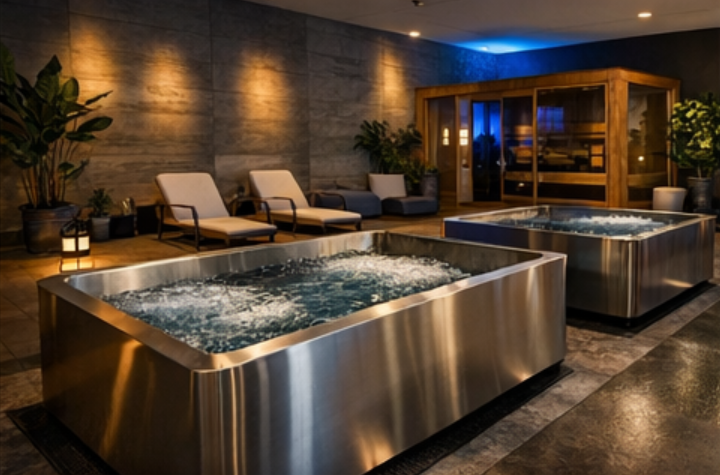
A cold plunge studio is a specialized wellness facility dedicated to offering controlled, high-efficiency cold water immersion therapy, frequently paired with thermotherapy to facilitate contrast therapy. Unlike traditional spas that focus primarily on passive relaxation, the modern cold plunge studio is positioned within the biohacking and physiological recovery sectors. It appeals to athletes, high-performing executives, and health-conscious consumers seeking tangible reductions in systemic inflammation, accelerated muscle tissue repair, and neurochemical optimization.
The industry is currently witnessing a transition toward "social self-care," where communal wellness environments are replacing traditional social venues like bars and nightclubs, allowing clients to experience guided contrast therapy in a shared, hospitality-driven setting.Real-world applications of this business model demonstrate its versatility and profitability across various facility types:
Social Wellness Clubs: Facilities like Remedy Place have pioneered the "social wellness club" model, offering comprehensive biomarkers, VO2 max testing, and precision mapping alongside premium communal cold plunging. Similarly, Othership operates dedicated sauna and ice bath studios that focus on guided, communal hot and cold experiences.
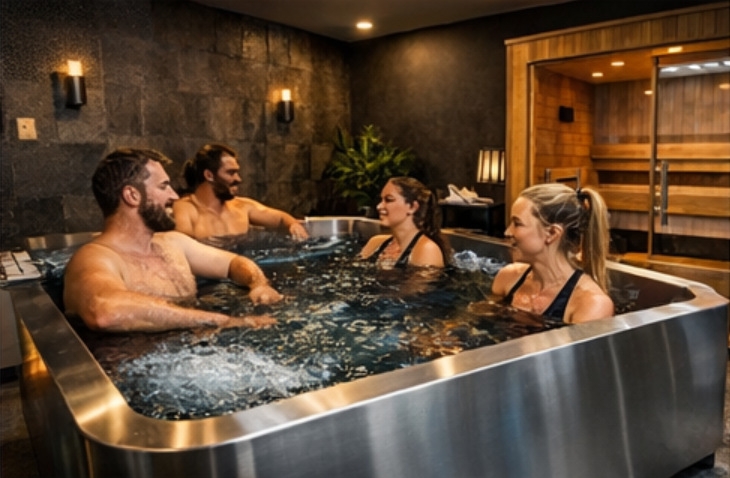
Contrast Therapy Franchises: Brands such as SweatHouz (SWTHZ) utilize a franchise model focused on whole-person wellness. They provide private luxury suites featuring infrared saunas, vitamin C-infused showers, and cold plunges to facilitate a complete recovery cycle.
Recovery-Focused Gyms: Traditional fitness centers are aggressively expanding into the recovery space. For instance, Revitalize Fitness reported a 30% increase in overall premium membership sales within six months of introducing cold plunge therapy as an integrated amenity.
Holistic Wellness Centers: Standalone wellness centers are successfully utilizing bundled services. Zen Wellness Studio introduced a "Plunge & Pamper" package, combining a cold plunge session with a rejuvenating massage, which became a best-seller and increased facility revenue by 20% in a single quarter.
The operational architecture of a cold plunge studio is inherently advantageous due to its high revenue density and minimal staffing requirements. Because the therapeutic dosage of cold water immersion typically lasts only three to five minutes, a single unit can accommodate dozens of clients per day, creating a compelling return on investment (ROI) profile that scales without corresponding linear increases in labor.
Facility Type | Integration Method | Primary Profit Opportunity | Estimated Annual Revenue |
Gyms & Fitness Studios | Dedicated "Recovery Zone" | Increased member retention, premium tier upgrades | $60,000 – $120,000 |
Wellness & Recovery Studios | Standalone service or contrast therapy | High-ticket recurring memberships, wellness packages | $80,000 – $150,000 |
Luxury Hotels & Spas | VIP guest access or paid upgrade | Enhanced guest experience, premium room pricing | $100,000+ |
Table 1: Commercial cold plunge integration models and estimated revenue trajectories.
Section 2: Equipment Needed for a Cold Plunge Studio
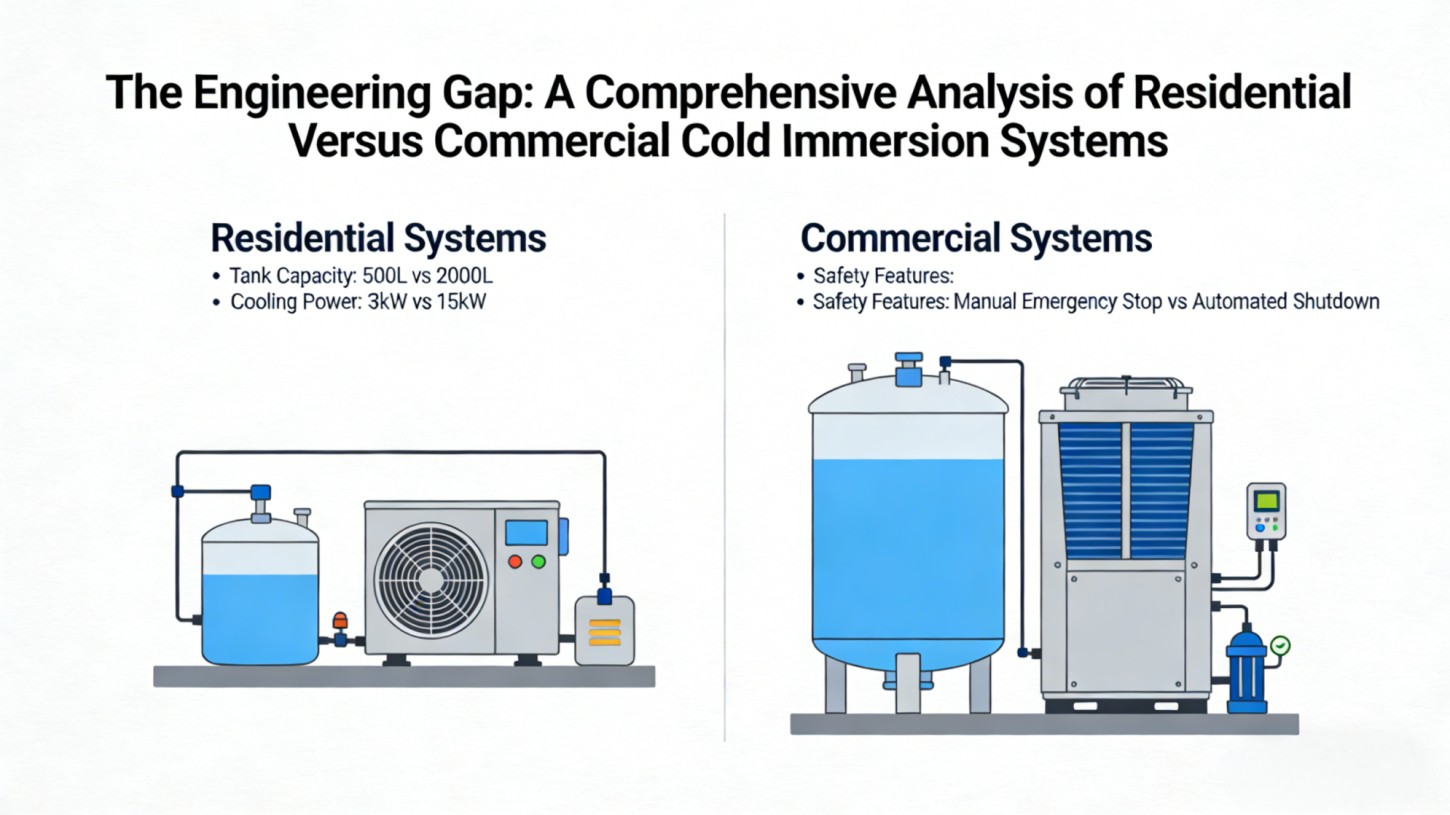
The functional core of a cold plunge studio relies on a highly engineered ecosystem of cold plunge equipment designed to maintain precise thermal dynamics, ensure rigorous water sanitation, and withstand the mechanical stress of continuous commercial use. Utilizing residential-grade equipment in a commercial setting frequently results in operational failure, compromised hygiene, and severe brand degradation.
Tubs and Ice Bath Chillers
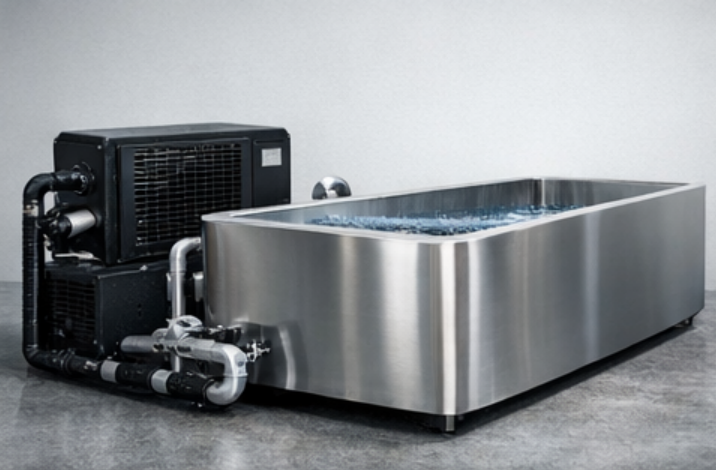
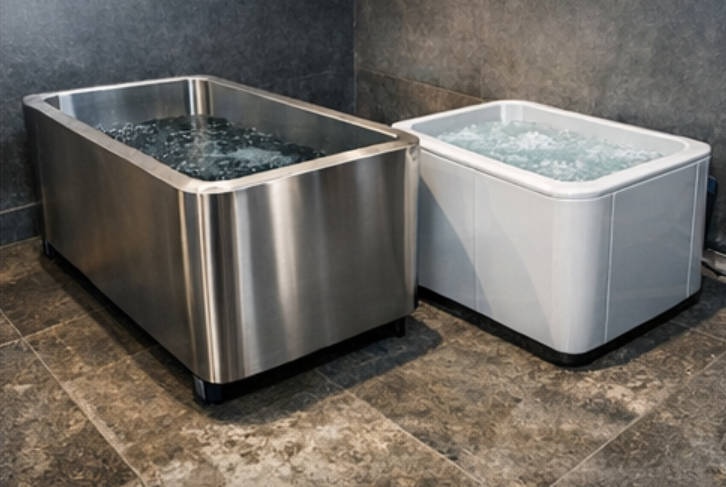
The primary physical interface for the user is the tub, which must be constructed from durable, thermally insulating, and corrosion-resistant materials such as aerospace-grade 304 stainless steel, heavy-duty acrylic, or reinforced fiberglass. These materials mitigate the accumulation of biofilm and withstand the harsh oxidative effects of continuous sanitation cycles.
Paired directly with the tub is the cold plunge chiller, the mechanical engine responsible for extracting heat from the water. While a 1/4 HP or 1/2 HP chiller may suffice for an insulated residential tub in a moderate climate, commercial studios necessitate 1.0 HP to 2.0 HP systems. A high-capacity commercial cold plunge system, such as a 1.5 HP unit, provides substantial cooling power (often yielding a coefficient of performance between 2.25 and 2.9). This enables the system to rapidly drop water temperatures to near-freezing levels (32°F - 39°F) and maintain those temperatures precisely, even when subjected to consecutive use by warm human bodies in high ambient temperature environments.
Advanced Water Filtration and Sanitation Systems
Maintaining pristine water quality across dozens of daily users is the paramount operational challenge. Cold water inherently slows down chemical reactions, rendering traditional halogen-based sanitizers less effective and making advanced oxidation an absolute necessity.
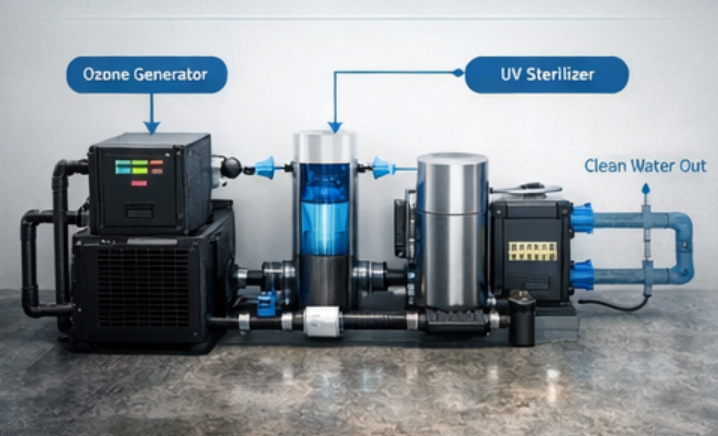
Commercial systems typically deploy a multi-stage approach combining mechanical filtration with advanced chemical oxidation. Mechanical filtration utilizes 20-micron pleated filters alongside washable steel mesh pre-filters to capture hair, skin cells, and gross debris before the water enters the chiller unit. For microscopic sanitation, operators must choose between Ultraviolet (UV) light, Ozone (O3) generators, or Advanced Oxidation Process (AOP) systems. Ozone is widely favored in high-use environments because it acts as a powerful, active oxidizer that breaks down organic contaminants and destroys biofilm within the plumbing lines. UV light, while highly effective at neutralizing pathogens that pass directly through its irradiation chamber, leaves no residual sanitizer in the main body of water, making it better suited as a supplementary, end-of-line treatment. AOP systems combine UV and Ozone to create hydroxyl radicals, offering the most aggressive and rapid oxidation available. Despite these advanced systems, commercial operators must frequently introduce a secondary residual chemical sanitizer, such as hydrogen peroxide or an EPA-registered disinfectant, to comply with stringent local health department regulations.
Plumbing, Drainage, and Facility Infrastructure
The hydrological and electrical infrastructure demands rigorous architectural planning. Unlike a simple residential setup, commercial facilities must manage high volumes of wastewater and adhere to commercial building codes.
Drainage architecture is a critical component. Industry best practices and plumbing codes strongly favor the installation of floor sinks over standard floor drains for commercial water-bearing equipment. A floor sink is purpose-built to handle high volumes of rapid discharge and includes a deep reservoir to capture debris. Crucially, discharging plunge water into a floor sink allows for the implementation of an "air gap"—a physical vertical separation of at least two inches between the equipment's drain pipe and the facility's sewer line. This air gap prevents catastrophic cross-contamination in the event of a municipal sewer backup, a requirement strictly enforced by health inspectors for commercial aquatic systems.
Electrically, the high-power characteristics of commercial ice bath equipment require robust, dedicated circuitry. A standard 1.5 HP or 2.0 HP integrated chiller and pump system can draw between 1380 watts and 3100 watts, demanding a dedicated 220V/240V circuit with a 30 to 60-amp capacity, installed by a licensed commercial electrician. Furthermore, because the environment intimately combines high-voltage electricity with standing water, Ground Fault Circuit Interrupter (GFCI) protection is a non-negotiable safety mandate to prevent fatal electrical shocks. Proper indoor installations also require advanced HVAC ventilation systems to manage the significant humidity generated by the aquatic environment and the substantial heat exhaust expelled by the compressor units.
Section 3: Startup Costs and Investment
The capital required to launch a cold plunge studio varies dramatically depending on the scale of the facility, the geographical market, and the chosen business structure—ranging from launching an independent brand to acquiring an established franchise. A nuanced understanding of both Capital Expenditures (CapEx) and Operational Expenditures (OpEx) is essential for accurate financial modeling and securing investment capital.
Capital Expenditures (CapEx)
For entrepreneurs entering the franchise space, total initial investments are substantial. Top-tier wellness franchises that focus on contrast therapy and recovery suites, such as SweatHouz, report initial entry costs ranging from $569,757 to $1,193,974. This covers franchise fees, architectural build-outs, luxury experiential design, and comprehensive equipment packages.
Independent operators face a different cost structure. Establishing a high-end, multi-modality recovery center necessitates specialized investment in commercial-grade cold therapy equipment, which can easily total $150,000 for multiple units, high-capacity chillers, and associated filtration technology. Additional fixed CapEx requirements include lease deposits (estimated at $72,000 for premium retail space), extensive HVAC and electrical upgrades ($80,000), pre-opening wages ($117,250), and necessary working capital, bringing the total independent startup cost close to $1.89 million for a large-scale, luxury facility.
Operational Expenditures (OpEx)
Once operational, a cold plunge studio incurs a range of predictable monthly expenses.
Expense Category | Description | Estimated Monthly Cost |
Commercial Rent | Prime retail or wellness district leasing | $5,500+ |
Payroll & Labor | Studio managers, maintenance, customer service | $15,000+ |
Utilities | High-demand electricity, water, ambient HVAC | $1,000 – $2,500 |
Maintenance & Cleaning | Filter replacements, ozone servicing, sanitation | $500 – $1,500 |
Commercial Insurance | General, Professional, and Property liability | $160 – $800 |
Table 2: Estimated monthly operational expenses for a commercial wellness studio.
Energy consumption is a variable cost highly dependent on equipment efficiency. Modern, premium chillers utilize advanced thermal management software to optimize power draw. While a high-powered 1.5 HP chiller may draw significant wattage during the initial cooling phase, intelligent systems automatically reduce power consumption once the target temperature is reached, allowing efficient systems to operate for under $1 to $2 per day on standby. However, in a commercial setting with frequent temperature fluctuations caused by continuous user turnover, total monthly utility bills for electricity, water, and specialized HVAC climate control routinely average between $1,000 and $2,500.
Insurance represents another vital operational expenditure. The unique physiological risks associated with cold water immersion—such as cold shock response, cardiovascular stress, and hypothermia—require robust risk management. Studios must carry comprehensive Commercial Package Policies (CPP) that blend general liability (covering slip-and-fall accidents common in wet environments), commercial property insurance (protecting expensive capital equipment), and professional liability or malpractice insurance (shielding the business from claims of negligence regarding the physiological outcomes of the therapy). Annual premiums for comprehensive coverage typically range from $2,000 to $10,000 depending on facility size and claim limits.
Software and financial management tools are also crucial operational investments. Systems like Zipper provide tailored CRM and booking software for time-slot management in recovery studios. Furthermore, integrating payment gateways that accept Health Savings Accounts (HSA) and Flexible Spending Accounts (FSA), such as Truemed, has proven highly lucrative. Plunge, a leading equipment manufacturer, reported a 109% increase in Average Order Value (AOV) by integrating Truemed's HSA/FSA payment options, effectively tapping into a customer segment previously constrained by financial limitations.
Section 4: Why Commercial Ice Bath Chillers Are Essential
The operational viability of a cold plunge studio is entirely contingent upon the presence of an advanced ice bath machine. The foundational premise of the business is the continuous delivery of a specific, therapeutic temperature threshold. Relying on manual ice delivery—a method often utilized in temporary athletic settings or basic residential environments—is fundamentally incompatible with a commercial business model.
Using manual ice introduces catastrophic inefficiencies into the operational workflow. It requires immense labor to purchase, transport, and manually load hundreds of pounds of ice daily. Furthermore, ice melts asynchronously, creating unpredictable thermal gradients and thermal stratification within the water. This lack of temperature stability renders it impossible to deliver a consistent, medical-grade therapeutic experience to paying clients. Medical literature indicates that the profound physiological benefits of cold exposure, including the robust release of norepinephrine and the mitigation of systemic inflammation, are strictly dependent on consistent, sustained exposure to targeted temperature ranges.
A commercial cold plunge chiller eliminates these variables. Engineered with high-capacity compressors and titanium heat exchangers, these units provide absolute temperature stability, locking the water temperature between 39°F and 55°F (4°C - 13°C) regardless of ambient room temperature or user turnover rates. This predictability allows operators to confidently schedule back-to-back appointments, ensuring the first client of the day and the last client of the evening receive identical therapeutic outcomes.
Feature | Ice-Based Ice Baths | Commercial Cold Plunge Chillers |
Temperature Stability | Highly variable; rapid warming during use | Locked precision (32°F - 55°F) regardless of load |
Hygiene & Sanitation | Stagnant water; high risk of biofilm accumulation | Continuous circulation with active ozone/UV oxidation |
Operational Labor | High; requires daily ice hauling and manual cleaning | Minimal; automated cooling and filtration cycles |
Cost Efficiency | High recurring costs for ice purchasing | Predictable, low daily electrical consumption |
Table 3: Comparison of manual ice baths versus automated commercial chiller systems.
The integration of the chiller with a continuous circulation pump is vital for hygiene and safety. Stagnant water is a vector for pathogen proliferation. The commercial chiller system constantly pulls water through the filtration media and sanitation chambers, preventing the formation of localized hot spots where bacteria could breed, and ensuring that the water remains optically clear and microbiologically safe. From a financial perspective, facility owners transitioning from manual ice setups to automated commercial chillers report reducing total operating costs by up to 40% while simultaneously recovering over 15 hours of staff labor per week.
Section 5: How to Choose the Right Cold Plunge Equipment
Selecting the appropriate equipment requires evaluating the intersection of thermodynamic performance, regulatory compliance, and warranty architecture. The market presents a wide spectrum of manufacturers, but decision-makers must rigorously filter options based on the demands of a high-volume, commercial environment.
The most significant barrier to entry in the modern recovery market is navigating the rapidly evolving regulatory landscape. Historically an unregulated space, the cold plunge sector is now drawing intense scrutiny from municipal health departments. According to the Centers for Disease Control and Prevention (CDC), commercial aquatic facilities frequently face closure due to noncompliant disinfection concentrations and safety equipment violations. Equipment procurement must prioritize compliance with the NSF/ANSI/CAN 50 standard. This stringent certification dictates the requirements for material health effects, corrosion resistance, disinfection efficacy, and durability testing for recreational water facilities. A commercial system must possess this certification, verifying that its pumps, filters, and chemical injection systems meet federal and state safety benchmarks.
Furthermore, operators must scrutinize regional health codes, which often classify cold plunge tubs under the same rigorous legal framework as public swimming pools or spas. For example, the Washington State Department of Health explicitly notes that most self-contained cold plunges on the market—even those marketed as "commercial"—fail to meet their state design requirements for regulated public use. Challenges include compliance with the Virginia Graeme Baker Pool and Spa Safety Act for anti-entrapment suction fittings, the requirement for continuous 24-hour filtration operation, and adherence to specific wastewater disposal mandates.
Accessibility is another critical legal consideration. Under the Americans with Disabilities Act (ADA), commercial cold plunges are generally treated as aquatic features, requiring specific accessibility accommodations. Equipment selection and facility design must incorporate ADA-compliant pool lifts, specific wall height restrictions (typically 21–36 inches for lift compatibility), clear floor space for wheelchair turning radiuses, and high-contrast visual markers. Choosing equipment that seamlessly integrates with ADA compliance mechanisms mitigates severe legal and financial liabilities.
The continuous operation of chilling compressors and high-pressure pumps leads to inevitable mechanical fatigue. Consequently, the structure of the manufacturer's warranty is a critical factor in equipment selection. Operators must demand comprehensive commercial warranties, explicitly verifying that the coverage extends to high-volume, non-residential use. A standard commercial service level agreement typically guarantees the structural integrity of the tub shell against blistering or delamination for one to three years, while providing a one to two-year warranty covering core mechanical functionality, including the compressor, heat exchanger, and control boards. It is vital to recognize that manufacturers will void warranties if failure is attributed to operator negligence. Using unapproved chemicals, allowing pH imbalances to corrode seals, or failing to replace micron filters at required intervals transfers the financial liability of the repair entirely to the business owner.
Finally, the hardware must be supported by rigorous Standard Operating Procedures (SOPs) and staff training. To manage the physiological risks of cold shock response, studios must mandate liability waivers and pre-plunge health questionnaires. Staff must be trained to recognize signs of hypothermia and execute emergency protocols. Operational SOPs must also dictate strict maintenance schedules: daily surface skimming and chemical checks, weekly filter backwashing, and quarterly professional descaling to maintain system integrity.
Section 6: Future Trends in Cold Therapy Businesses
As the commercial recovery industry matures, the next generation of cold plunge studios will be defined by technological hyper-personalization, sustainable architecture, and the deep integration of artificial intelligence.
The future of the cold plunge studio lies in the transition from passive equipment to active, intelligent health ecosystems. Leading manufacturers are already integrating Artificial Intelligence (AI) to optimize thermal management, utilizing predictive algorithms to adjust cooling output based on historical facility usage patterns. This maximizes energy efficiency while ensuring peak readiness during high-traffic windows. Simultaneously, the user experience is being revolutionized by biometric data integration. Future studio models will sync seamlessly with consumer wearables and health ecosystems, tracking real-time physiological metrics such as heart rate variability (HRV), peripheral body temperature, and stress adaptation during the plunge. Platforms like Echelon are utilizing AI to craft hyper-personalized fitness and recovery journeys, eliminating guesswork for users and making the studio experience "stickier" to drive retention. This transition from generic immersion to data-driven recovery protocols allows operators to demonstrate quantifiable physiological improvements to their clients, drastically validating premium pricing structures.
As the industry scales, the environmental footprint of heavy electrical cooling systems is facing increased scrutiny. To address this, the next iteration of commercial chillers is adopting highly energy-efficient thermal architectures and transitioning toward eco-friendly, low-Global Warming Potential (GWP) refrigerants, such as R32 and R454a, to comply with tightening global environmental regulations. Simple operational efficiencies, such as utilizing premium insulated covers and ensuring proper chiller airflow, can independently reduce energy consumption by up to 40%.
At the facility level, the architectural design of wellness studios is increasingly prioritizing regenerative, sustainable building materials. Operators are moving away from synthetic insulations and toxic finishes, opting instead for materials that actively contribute to the therapeutic environment. Hempcrete, a biocomposite material combining hemp hurds with a lime-based binder, is emerging as a superior alternative for studio construction, offering exceptional thermal insulation, fire resistance, and moisture control without the off-gassing associated with traditional materials. Furthermore, the acoustic and aesthetic design of the recovery zone is being enhanced through the widespread use of sustainable cork wall coverings and flooring. Cork provides natural thermal warmth, excellent acoustic dampening to maintain a serene meditative environment, and operates as a rapidly renewable resource, aligning the physical facility with the holistic wellness values of the consumer base.
The trajectory of the global market is also heavily influenced by developments in the European MedTech sector, which is navigating the strict European Medical Device Regulation (MDR) frameworks. This regulatory rigor is forcing a professionalization of the biohacking industry. Technologies that were once considered fringe are now subjected to clinical validation. As these standards permeate the North American market, cold plunge studios will increasingly resemble high-end clinical longevity centers rather than traditional gyms. Offerings will stack cold water immersion with whole-body cryotherapy, epigenetic testing, and advanced neuro-relaxation techniques, creating a comprehensive, medically validated approach to preventative healthcare.
Conclusion
The establishment of a commercial cold plunge studio represents a sophisticated venture at the intersection of hospitality, clinical physiology, and advanced engineering. The explosive growth of the cold therapy market confirms that proactive inflammation management and mental resilience training have fundamentally transitioned from a niche biohacking trend into a dominant pillar of the global wellness economy.
However, success in this high-margin sector requires significantly more than purchasing a tub and filling it with water. It demands a rigorous, capital-intensive approach to facility design. Operators must navigate complex capital expenditure models, prioritize the procurement of high-horsepower, continuous-duty commercial chillers, and deploy advanced multi-stage sanitation systems utilizing ozone or AOP technology. More critically, the industry is entering an era of strict regulatory oversight. Navigating municipal health codes, securing NSF/ANSI 50 compliant equipment, adhering to stringent drainage and electrical standards, and ensuring full ADA compliance are absolute prerequisites for operational legality and long-term risk mitigation.
By meticulously architecting the facility's infrastructure, strictly enforcing safety and maintenance protocols, and embracing future integrations of AI-driven biometrics and sustainable design, entrepreneurs can successfully capitalize on the recovery revolution. Ultimately, a well-executed cold plunge studio does not merely sell access to cold water; it provides a highly engineered, predictable, and transformative physiological experience that drives exceptional client loyalty and robust financial returns.
At Quanguan, we work directly with gyms,recovery studios, and professional facilitiesto ensure commercial ice bath systems areinstalled correctly from day one. With hands-on manufacturing experience and adeep understanding of real-worldinstallation challenges, our team helpsclients avoid common mistakes, reducelong-term operating costs, and achievestable, reliable performance.
lf you are planning a commercial ice bath installation or evaluating systemrequirements for your facility, contact Quanguan to discuss your project and getpractical guidance tailored to your spaceand usage needs.