
Introduction:WhyCommercial Ice Bath Systems Matter
Cold water immersion(CWI)has rapidly evolved from a niche recovery method used by elite athletes into a mainstream offering across gyms,sports facilities,wellness studios,and rehabilitation centers.As demand for recovery-focused services grows,ice baths are no longer viewed as optional amenities—they are becoming revenue-generating infrastructure.
However,many facilities underestimate the difference between residential ice bath solutions and true commercial-grade systems.What works for a single home user often fails quickly under continuous,high-traffic usage.Selecting the right commercial ice bath machine is therefore not just a product decision,but a long-term operational and financial investment.
This guide is written from the perspective of an experienced ice bath machine manufacturer working with international B2B clients.It explains how commercial ice bath systems work,what technical factors truly matter,and how facility owners can avoid costly mistakes when selecting equipment.

Commercial Ice Bath Machines vs.Traditional Ice Baths
The Problem with Ice-Only Solutions
Traditional ice baths rely on manually adding ice to cool water.While this may seem inexpensive initially,it quickly becomes unsustainable in commercial environments.
Common issues include:
High recurring ice costs
Inconsistent water temperatures
Labor-intensive daily operation
Increased sanitation risk from manual handling
For facilities serving dozens of users per day,these drawbacks translate into higher operating costs and a poor user experience.
The Commercial Chiller Advantage
A commercial ice bath machine actively cools and maintains water temperature within a controlled range—typically between 3°C and 15°C—regardless of user load.
Key benefits include:
Stable,repeatable temperatures
Reduced labor and consumable costs
Faster recovery between sessions
Improved hygiene and safety control
Over time,commercial systems consistently outperform ice-based methods in both reliability and total cost of ownership.

How Commercial Ice Bath Machines Work
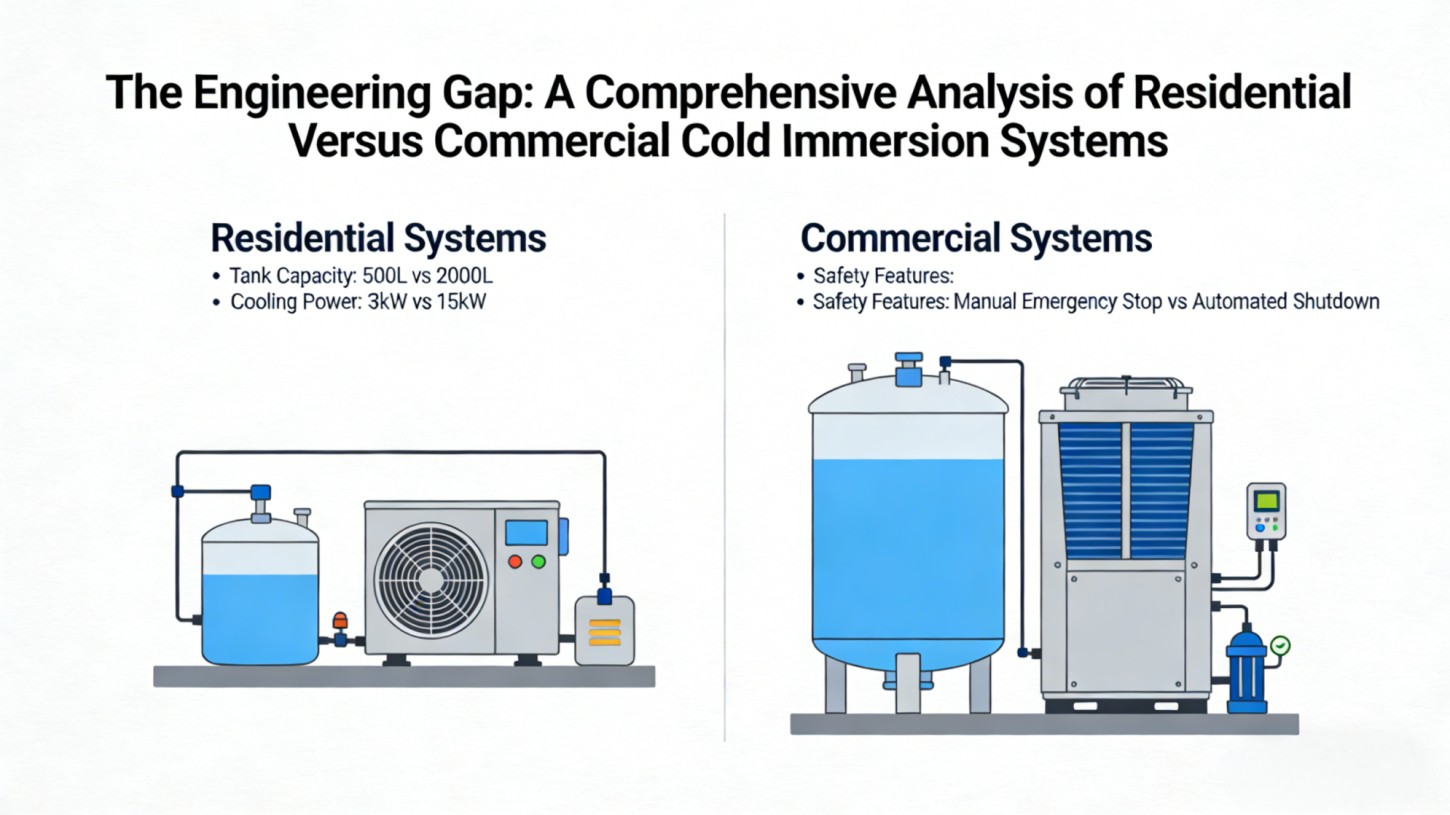
A commercial ice bath system is a refrigeration-based thermal management unit.Its core function is to remove heat from water efficiently and safely,even under continuous use.
At a high level,the system consists of:
A refrigeration circuit(compressor,refrigerant,heat exchanger)
A circulation pump
A filtration and sanitation system
A digital control and protection system
Each of these subsystems plays a critical role in long-term performance.
Key Technical Factors Buyers Should Evaluate
1.Cooling Capacity and Recovery Speed
In commercial environments,throughput equals revenue.A system that takes hours to recover temperature after each user limits how many sessions can be sold per day.
Commercial-grade systems are designed to:
Handle high thermal loads from multiple users
Recover target temperatures within minutes rather than hours
Operate continuously without overheating or short-cycling
For most commercial facilities,systems using 1HP or higher cooling capacity are essential.
2.Compressor Technology:Residential vs.Commercial
The compressor is the heart of any chiller.
Rotary compressors are common in residential units.They are compact and affordable but wear quickly under heavy-duty operation.
Scroll compressors are the industry standard for commercial refrigeration.They offer higher efficiency,lower vibration,and significantly longer service life.
For gyms or recovery centers expecting regular daily usage,scroll compressors are strongly recommended.
3.Refrigerant Choice and Energy Efficiency
Modern commercial ice bath machines are increasingly using R32 refrigerant instead of legacy options like R410A.
R32 offers:
Higher cooling efficiency
Lower environmental impact(lower GWP)
Reduced energy consumption over time
From an operator’s perspective,this translates directly into lower electricity bills and improved sustainability compliance.
4.Heat Exchanger Material:Why Titanium Matters
Ice bath water environments are chemically aggressive due to:
Chlorides in water
Sweat and organic contaminants
Sanitizers such as ozone or chlorine
Titanium heat exchangers are widely considered the gold standard for commercial ice baths because they:
Resist corrosion and pitting
Tolerate salt and ozone exposure
Maintain long-term thermal performance
Copper-based exchangers,while common in HVAC systems,often fail prematurely in cold plunge applications.

Safety,Reliability,and Control Systems
Advanced Temperature Control
Commercial systems rely on intelligent controllers rather than simple on/off thermostats.These controllers manage:
Temperature differentials to avoid compressor stress
Anti-freeze protection logic
Stable operation under variable load conditions
This level of control significantly reduces breakdown risk.
Fault Detection and Diagnostics
Professional ice bath machines provide detailed fault codes that allow operators to identify issues quickly—such as:
Low water flow
Sensor failure
Freeze risk
Water level problems
This minimizes downtime and avoids unnecessary service calls.
Sanitation and Water Quality Management
High user traffic increases biological contamination risk.Cooling alone is not sufficient.
Commercial ice bath systems typically integrate:
High-flow filtration
Ozone or UV sanitation
Interlocked safety logic to prevent overexposure
Proper sanitation protects both users and equipment while ensuring compliance with public facility hygiene standards.
Certification and Compliance:Non-Negotiable for Commercial Use
Installing uncertified equipment near water exposes facilities to serious liability.
Commercial ice bath machines should meet recognized safety standards,including:
ETL/UL certification(North America)
CE compliance(Europe and global markets)
IPX-rated water ingress protection
These certifications are often required by insurance providers and local inspectors.
Common Buyer Mistakes
Despite growing awareness,several mistakes remain common:
Choosing residential equipment for commercial use
Underestimating cooling capacity requirements
Ignoring long-term operating costs
Overlooking certification and compliance
Failing to plan for maintenance access and ventilation
Avoiding these errors can save thousands in downtime and replacement costs.
Future Trends in Commercial Ice Bath Systems
The industry is moving toward:
Smart controls and remote monitoring
Integration with facility management systems
Improved energy optimization
Higher durability for 24/7 operation
Manufacturers with strong engineering and OEM experience are best positioned to support these evolving demands.
Conclusion
A commercial ice bath machine is not a lifestyle accessory—it is mission-critical infrastructure for modern gyms,sports teams,and recovery centers.
Choosing the right system requires looking beyond price and focusing on:
Commercial-grade cooling architecture
Durable materials like titanium
Intelligent safety and control systems
Certified compliance and long-term reliability
For facilities evaluating cold plunge solutions,working directly with an experienced manufacturer can significantly reduce operational risk and maximize return on investment.Brands like Quanguan,with a background in commercial refrigeration and international B2B supply,exemplify the engineering-first approach required for sustainable commercial deployment.